



You have graduated—what a milestone has been achieved! Yet, what comes after graduation seems not so exciting for recent graduates. More often than not, it’s rather dreadful and stressful. You should figure out what to do with your diploma (most likely hanging on the wall in a glossy custom frame, pleasing the eye, isn’t it?) and where to move forward in life.
Here’s the first thing you should know. It’s absolutely normal to experience anxiety or even total disorientation when you think about the prospects of planning a professional career right after graduating from college or university. And you’re not alone. Every second college student doesn’t feel career-ready at all and doesn’t know where or how to find a job after graduation.
At college (or university), everything was super predictable and understandable: you followed a strictly defined academic course. What now? Now, you’re wondering if your diploma came with a secretly hidden career plan guiding you on what to do next. Unfortunately, it didn’t…
But luckily, you have it right here, in this article. It contains all the necessary strategies, tools, and templates for building a career roadmap as a college graduate. So, let’s punch in the coordinates in your career GPS.
What Is a Career Roadmap for College Graduates: Example + Template
To launch a career after graduation, every recent graduate must have a well-thought-out plan. Such plans are often called career roadmaps—trajectories of professional advancement in post-grad life.
It’s like Google Maps—well, sort of. Of course, a career roadmap won’t show or predict every single detail (like at what office exactly you’ll have a coffee break or eat lunch in five years). However, it does offer guidelines to help you become a thriving expert in your preferred field.
It involves a thorough goal-setting process to create a professional development plan as a recent graduate:
- Short-term goals (for one or two years at most) → Sharpen your skills (or develop new ones if needed) and start slowly entering a career field (maybe with an entry-level job or internship).
- Medium-term goals (for two or five years) → Continue learning and regularly apply for higher positions (managerial roles like a supervisor or team leader)
- Long-term goals (for five to ten years) → Keep growing as a specialist and consider roles in the senior leadership or C-suite.
Let’s take a glimpse at the career growth plan of a business student. For instance, one of the mid-term goals is obtaining several professional certifications, such as Certified Business Analyst or Project Management Professional (PMP).
To set yours, use career development plan templates or worksheets. They will help you map out your ten-year career route in a more precise and structured way.
Nicolas Breedlove, CEO at PlaygroundEquipment.com, says, “A career roadmap is your blueprint for growth. Start by setting achievable short- and medium-term goals. Every step should be in line with your long-term vision and interests. Review and adjust your plan regularly. This approach ensures steady progress in any professional path.”
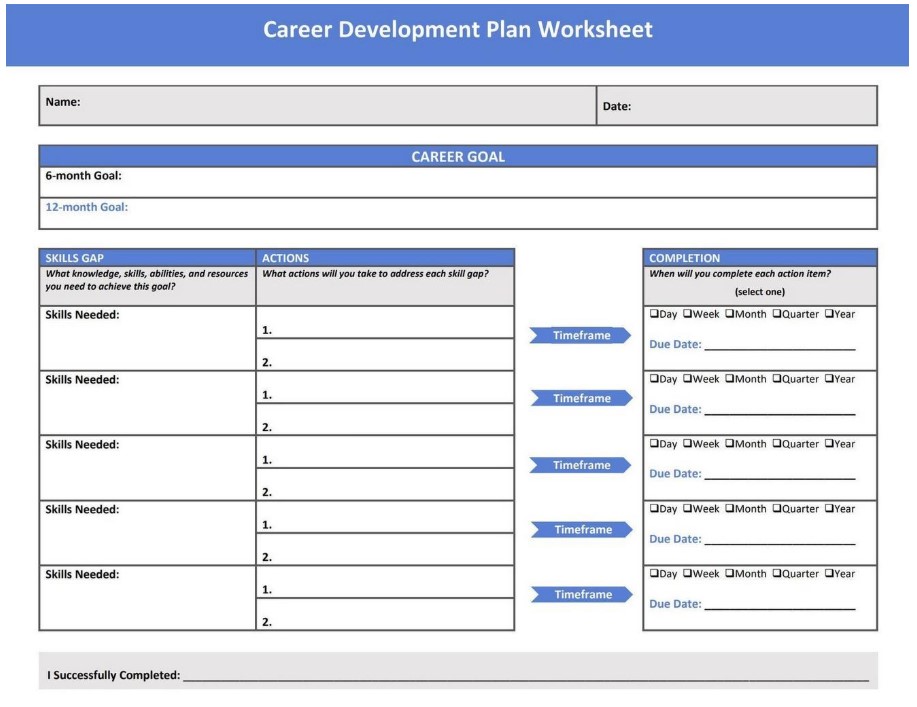
For example: Check out this worksheet for setting short-term career goals.
5 Pieces of Advice for New Graduates to Build a Career Roadmap after College
Listen to Your Inner Voice (and Verify Whether It’s Genuine)
No-no-no, not your anxious inner critic, the other one. The one that might be whispering something like this, “Hey, you’ve always wanted to design cars, remember? Why not pursue this long-dreamed-of career?” Even if you have a degree in Medicine or any other field unrelated to your dream job.
Let’s be realistic—degrees open doors, but they don’t define you or your future career path. The majority of college grads don’t work in their fields of study. Actually, only 46% do.
So, you don’t have to tie yourself to your degree, even if it promises a higher-paid job (but, yes, the passion vs. paycheck choice is tough). The only caveat is this. Make sure it’s not simply impulsive escapism but a deliberate, carefully considered decision. There are several practical ways to test that inner calling through:
- Courses
- Workshops
- Skill-building challenges
- Open-source projects
- Freelancing gigs
- Volunteer work
But then—What if your heart longs for entrepreneurship or even solopreneurship?
Peter Čuček, Owner at Tuuli, says, “Don’t be afraid to take an independent path when building a career roadmap after graduation. Becoming an entrepreneur—or more so a solopreneur—is often a risky route with many roadblocks on the way. But if that’s what excites you, it’s hugely rewarding in the long run. It’s always about passion and motivation driving success in professional development and business, particularly.”
Understand the Current Job Search and Market Trends
True, the job market trends shift faster than viral memes. But it doesn’t mean you can’t trace the most noticeable shifts to adequately plan your career after graduation based on modern tendencies. You do want to stay up-to-date and relevant as a professional, don’t you?
Here’s how you can do that:
- Check job boards. Visit sites like Glassdoor, LinkedIn Jobs, Indeed, or others that feature new, emerging roles in the labor market.
- Use free trend-discovery tools. Go to Google Trends or use Semrush’s keyword tool to detect the most popular job searches.
- Tune into the job-news buzz. Join LinkedIn groups or HR blogs and subscribe to newsletters scoping the current employment landscape.
- Keep tabs on remote work opportunities. Note: There’s a huge rise in global digital jobs that can be performed remotely from literally anywhere. They are projected to increase by 25%, surpassing 90 million vacancies by 2030.
- Ask other professionals from your niche. What skills are the most sought after right now? Do they expect the industry to undergo drastic changes within the next three or five years?
While looking at the most cutting-edge directions in the job market, you may consider entry-level AI jobs as trending career pathways for graduates.
Jeffrey Zhou, CEO and Founder of Fig Loans, says, “Focus on skills that make a real difference in your work. Technical expertise, financial literacy, and problem-solving go hand in hand. Combine them with communication and collaboration skills. Keep an eye on emerging trends and technologies. Staying relevant is the key to long-term success.”
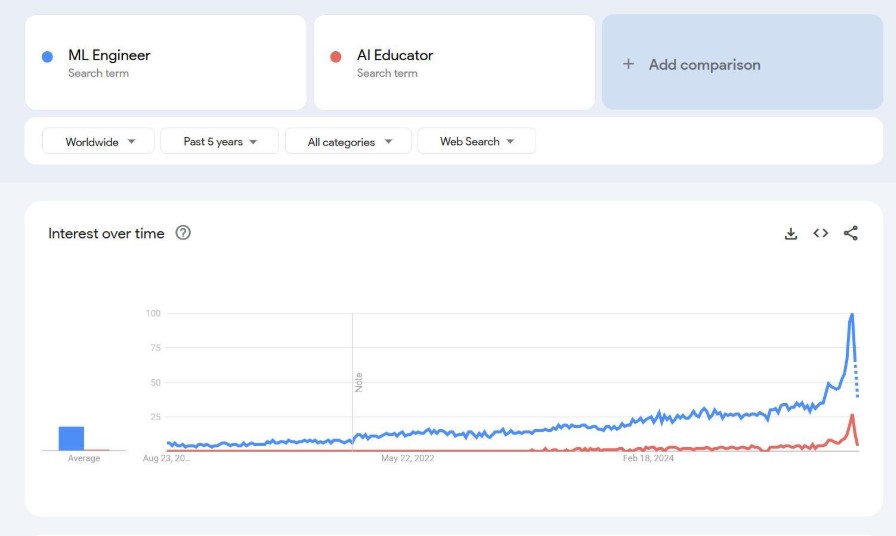
For example: See how the interest for “ML Engineer” and “AI Educator” jobs changed over the past five years, with steep popularity surges in 2025.
Improve or Expand Your Skill Set
Wait, I mastered all the necessary soft and hard skills at college/university? Where should I expand to, then?
That’s a fair question you may ask.
The reality is that nowadays, employers hire for particular competencies that you should either boost or add to your skill set (if you’re lacking them). They will help you step on your professional path more confidently and get hired faster.
Let’s review the most-wanted skills employers look for today.
Soft Skills
The top three in-demand soft skills among employers are:
- Critical thinking
- Problem-solving and decision-making
- Communication (which comes with a whole bunch of sub-competencies, such as active listening, empathy, negotiation, conflict resolution, and so on)
Hard Skills
The top three in-demand hard skills among employers are:
- Data analytics
- Project management
- Artificial intelligence
According to Anna Zhang, Head of Marketing at U7BUY, “Graduates should focus not just on acquiring skills, but on mastering those that are in high demand in their chosen field. Continuous learning and adaptability set candidates apart in today’s competitive market.”
Note: Your skill set would hugely depend on the chosen career path after graduation. Want to succeed as a software engineer? Brush up on your skills in software development (probably with a sharper focus on AI). Want to build a professional career in SEO or marketing? Master not only SEO but also AEO and GEO, currently the trendiest topics within the niche.
Grow Your Personal Brand and Professional Network
Creating a career plan (and then trying to land a desirable job) is like entering a huge post-graduation talent show where tons of graduates are holding their degrees and showing off their best talents. Naturally, you feel lost, but then, your name as a job candidate gets literally lost among thousands of others.
So, your task is to stand out from the crowd. That’s when personal branding is a must-do for college or university graduates at the initial point of their professional paths.
Now, let’s dwell on the importance of networking. Most jobs (ranging from 50% to 80%, based on research) are filled through word-of-mouth recommendations or referrals. That’s why building your network is another significant step you should take. It’s virtually a bridge between you and your dream job after graduation.
And now, over to the “How” for each.
How to Build a Strong Personal Brand
- Improve your social media presence.
- Prioritize LinkedIn branding: Polish your LinkedIn headline, “About” section, profile picture, background, and other elements. Don’t forget to add the #OpenToWork badge to your profile to inform recruiters that you’re open to job offers.
- Design a personal website.
- Create a branded portfolio (perhaps you already have a couple of work samples or even projects with client testimonials).
How to Build a Strong Professional Network
- Prioritize LinkedIn networking. This platform is by far the best digital hub for networking and getting jobs. In fact, 87% of recruiters use LinkedIn to find and evaluate candidates.
- Connect with your college/university alumni.
- Attend online/offline industry events.
- Join professional communities or groups on platforms like Reddit or Facebook.
Emily Ruby, Owner at Abogada De Lesiones, “Your professional reputation starts early. Build meaningful connections, not just contacts. Share your expertise and stay active in your industry. Networking is about trust and credibility. These relationships open doors to new opportunities.”
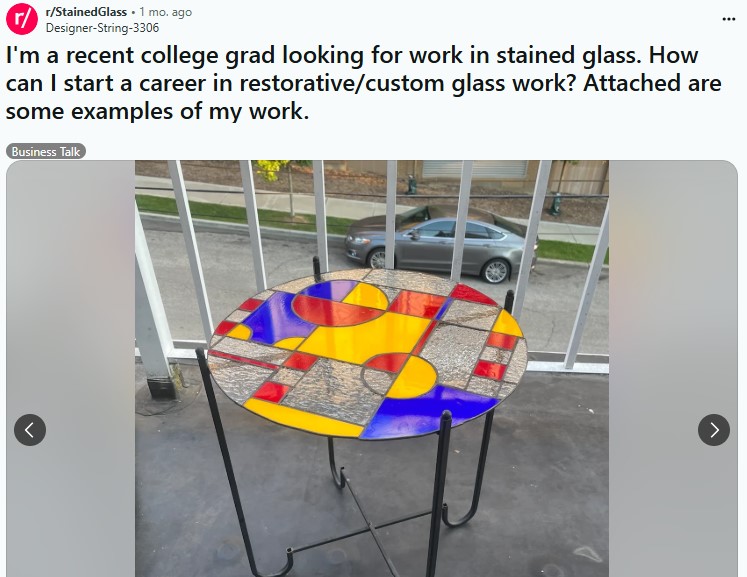
For example: Here’s a great networking post on Reddit: “I’m a recent college grad looking for work in stained glass. How can I start a career in restorative/custom glass work?”
Stay Flexible: It’s Never Too Late to Change Jobs (Even Mid-Way)
Career paths aren’t necessarily straight “highways” with distinct retirement destinations. Don’t be afraid of unexpected stops, lane switches, detours, or even U-turns. People do change career pathways quite frequently, even after “settling down.” The study reveals that Americans typically change at least 12 jobs by the time they reach the age of 58.
You might start in Accounting but end up in UX design, or switch from the legal sphere to real estate. Why would you do that? The reasons may vary: from unmet expectations to interest changes. The key here is to be ready to re-adjust your career roadmap on the go whenever needed.
For example: Take this story from @SGTSanjay. He began his career with a diploma in Electrical Engineering and joined the Indian Air Force as an Engine Fitter. Having gained a decent experience in the field, Sanjay wanted to try “something new—something future-oriented.” So, he decided to transition from aircraft to algorithms, landing his first software job and then finding his favorite niche: a career in Magento eCommerce development.
Wrapping Up Your Career Plan After Graduation
Graduating from college/university may indeed feel as if you’ve been stuck with no idea of what to do and no apparent way out. However, if you have a good career roadmap and get ready to swiftly adapt to the circumstances and overcome all the traffic jams on the chosen route, you’ll eventually arrive at professional success.
Wishing you a safe and smooth career path with this guide as a navigator!