



Packing art for shipping requires more than simply placing it in a box. The right materials and packing methods can protect paintings, prints, photos, framed art, and other valuables during transit. They help prevent damage from impacts, moisture, temperature changes, and shifting.
At Church Hill Classics, we’ve been packing custom frames and shipping framed art for more than three decades. We’re dedicated to the rich art history of making frames by hand and protecting them in transit.
It’s why we developed our patented SMART moving box. We tested it for high tensile strength and made it with 100% curbside recyclable cardboard. This high-quality packaging ensures your frames arrive safely, giving you peace of mind.
Whether your artwork or framed pictures need to be packaged for a few days or for many years, the packaging and handling must be sufficient to prevent damage, discoloration, or deterioration to the item.
Supplies You May Need to Pack Artwork
Keep in mind that the packing supplies you’ll need will vary depending on the size, condition, medium, and value of your artwork. Before packing framed pictures that are irreplaceable, consider consulting a professional art shipper or an art conservator first for best practices. Otherwise, typical artwork packaging supplies may include:
- Acid-free tissue paper or glassine to help protect certain artwork surfaces
- Archival backing board or foam board for extra protection and added support
- Foam corner protectors to safeguard vulnerable frame edges
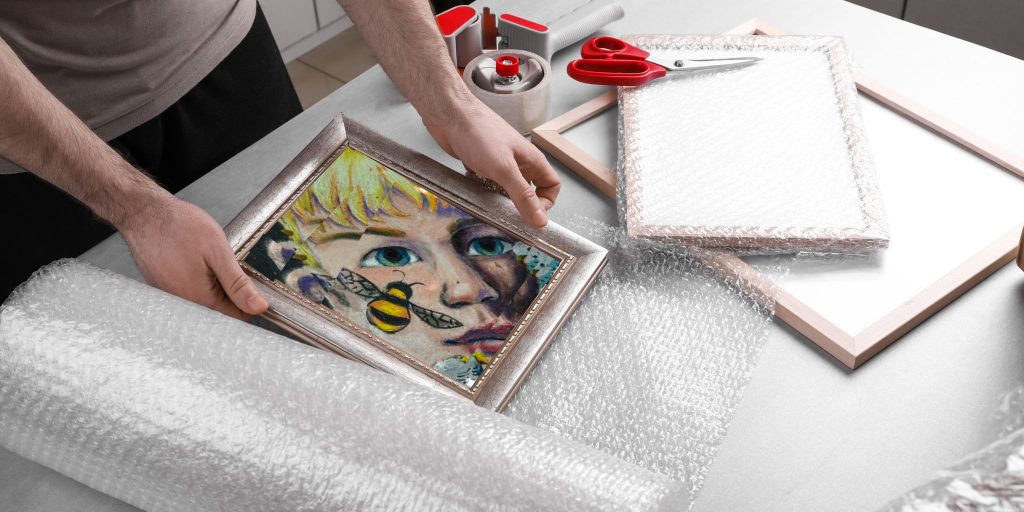
- Bubble cushioning or foam sheets to absorb shock during transit
- Packing paper or kraft paper to keep the artwork from shifting inside the box
- A sturdy corrugated shipping box for packing pictures for moving
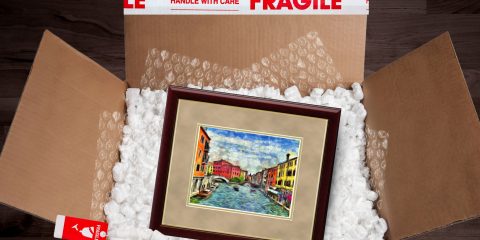
- A second outer box for double-boxing, which is great for fragile fine art packing
- Heavy-duty packing tape for securely sealing the box
- Polyethylene sheeting or moisture-resistant barriers when additional protection from humidity or moisture is appropriate
- A custom wooden crate for oversized, heavy, highly valuable, or unusually fragile artwork
- Labels and permanent markers for addresses, contents, and applicable handling instructions
- Measuring tape to determine the appropriate box, padding, and clearance around the artwork
How to Pack Artwork for Shipping in 7 Steps
Whether shipping a framed picture or packing multiple pieces, be sure to follow our step-by-step instructions for keeping items safe during transit:1.) Assess the artwork before packing it
Before choosing your packing materials, consider the size, weight, condition, medium, and value of the artwork. Fragile or unusually large pieces may require assistance from a professional conservator or fine-art shipping service.2.) Prepare a clean workspace and gather your supplies
Be sure to work on a clean, dry surface away from food, drinks, dust, and other potential contaminants. Ensure your shipping box is sturdy and that the materials for packing photo frames are acid- and lignin-free and deemed archival-quality.3.) Protect the artwork’s surface
Create a protective barrier between the artwork and the outer packing materials. For prints, photographs, certificates, and other works on paper, use appropriate archival materials and keep adhesives away from the artwork itself. Extra care should be taken with media such as charcoal, pastels, or flaking paint, since some protective films can generate static that may disturb delicate surfaces.4.) Protect the frame, glass, and corners
Reinforce the corners and edges of your glass frames before adding cushioning around the entire piece. Picture frames containing glass or other fragile glazing need careful protection from impact. If the piece is particularly valuable or oversized, consider fine-art packaging from a certified shipping carrier instead of relying on a standard cardboard box.5.) Cushion the artwork so it cannot move
To absorb shock and vibration during handling and transit, use sufficient cushioning around the protected artwork so that it can’t slide, shift, or strike the sides of the container during shipping. The best cushioning is usually a combination of materials rather than one alone, so consider a mix of foam-core inserts or sheets, layers of bubble wrap, crumpled kraft paper, packing peanuts, and corrugated cardboard liners.6.) Place it in a strong carton and seal the box securely
Measure the length, width, and height of your piece, adding six inches to each dimension to find the ideal size for your shipping box. Use strong packing tape to seal all the seams and flaps along the side of the box. For extra security, add additional strips of tape perpendicular to your picture box length about 4 inches apart.7.) Label the package and choose the right shipping method
Clearly label the package with recipient information and appropriate handling instructions, such as marking the box as “fragile”. Before selecting a carrier, check its declared-value policies, liability limits, and coverage for artwork. FedEx, for example, recommends shipping artwork with a declared value no greater than $1000; if art is valued over $500, they offer Premium Art Boxes designed for highly valuable artwork.Do’s and Don’ts for Packing Valuable Artwork
These do’s and don’ts will help your expensive paintings, pieces of artwork, and valuable items stay safe and ensure they emerge from shipping and storage in its original state.| DO | DON’T | WHY IT MATTERS |
| Consult an art conservator or professional packing service for valuable or delicate pieces. | Don’t assume every packing material is safe for every type of artwork. | Incompatible materials can cause staining, deterioration, or other damage |
| Check the condition of the artwork before packing it. | Don’t ship a piece that is already unstable or deteriorating without professional guidance. | Existing damage can worsen during handling and transit. |
| Handle artwork with clean hands or appropriate gloves when needed. | Don’t touch sensitive surfaces unnecessarily. | Oils, dirt, and fingerprints can damage certain materials. |
| Use protective barriers and cushioning appropriate for the artwork. | Don’t rely on unsuitable or acidic packing materials. | Proper materials help protect against impact, moisture, and environmental changes. |
| Keep individual pieces separated and securely cushioned. | Don’t allow artwork or valuables to shift or strike one another inside the package. | Movement during transit is a major cause of breakage and surface damage. |
| Work in a clean, uncluttered packing area. | Don’t pack artwork for moving in dusty, dirty, or crowded spaces. | A controlled workspace reduces the risk of contamination or accidental damage. |
| Use screws or heavy-duty packing tape to secure crates or boxes when appropriate. | Don’t use nails or staples near valuable or fragile objects. | Hammering and removal can create vibration and jarring. |
| Use proper lifting equipment or ask for help with heavy pieces. | Don’t attempt to lift bulky or unwieldy artwork alone. | This protects both the artwork and the person handling it. |
| Keep tape and adhesives away from the artwork and frame surface. | Don’t place packing tape directly on artwork, photographs, or finished frame surfaces. | Adhesives can leave residue or permanently damage finishes and surfaces. |
| Keep paper artwork flat between suitable protective boards when appropriate. | Don’t roll fragile or valuable works on paper unless a conservator recommends it. | Rolling can cause creases, cracking, or permanent distortion. |
| Clearly label boxes and include handling instructions when needed. | Don’t ship fragile artwork in an unidentified package. | Clear identification can reduce confusion and encourage appropriate handling. |
Frequently Asked Questions About Shipping Artwork
What is the safest way to ship artwork?
Research shipping carriers’ policies regarding artwork, liability, claims, delivery speed, handling requirements, and declared value. Standard parcel carriers are fine for items valued $500 or less, but you may want to consider a specialized fine-art shipping service for irreplaceable pieces. Fine-art carriers can offer climate-controlled vehicles, specialized handling, and door-to-door service, so this may be the safest mode of transport.Should you use bubble wrap when shipping framed artwork?
Yes, bubble cushioning is ideal for absorbing shock during transit, but it should never be placed directly against the artwork surface itself. Instead, place a clean, non-abrasive conservation material, like unbuffered, acid-free paper or glassine, between the artwork and the bubble wrap. For sensitive or fragile surfaces, like charcoal and pastels, use a recessed mat or sink mat to prevent surface abrasion.How much cushioning should you use around framed artwork?
First, set two or three sheets of ½-inch-thick bubble wrap on top of the frame. Place a cut-to-fit piece of cardboard on top of the sheets, securing the cardboard with blue painter’s tape and affixing it to the back of the frame. Next, wrap artwork with bubble cushioning, winding it around the frame roughly six times to ensure a 3-inch layer of cushioning around the entire surface.Can you ship artwork with glass in the frame?
Yes, we ship glass frames all the time. However, artwork under glass requires additional precautions. Be sure to use ample shock-absorbing cushioning to ensure the piece won’t move or tilt while in transit. For especially valuable or irreplaceable artwork under glass, professional packing may be the safest option.Should artwork be rolled or shipped flat?
This depends on the type of artwork that you’re shipping. Some durable prints or canvases may be suitable for rolling but delicate media or documents with historical significance should not be rolled without professional guidance. As a general rule, most prints, photographs, and certificates are safest when shipped flat between rigid supports.Is it better to use a box or crate for shipping artwork?
For the most part, a strong corrugated box will work well for many smaller framed prints and canvases, while a custom crate is best for large, unusually shaped or especially fragile artwork. When in doubt, consult an art conservator.Should valuable artwork be insured when shipped?
Whenever you ship valuable artwork, be sure to carefully research the specific insurance policies and coverage offered by each shipping carrier before purchasing insurance or declaring a value. Are there any exclusions that apply to artwork? What documentation would be required to make a claim? For high-value pieces, determine whether or not specialized fine-art insurance makes the most sens

Lucie Voves is the CEO and Founder of Church Hill Classics/diplomaframe.com.