



There’s a moment most of us remember: the first time a concept you learned in class shows up in real life. It’s equal parts thrilling and humbling. You think, ‘oh, this is what they meant.’
That leap from theory to practice is where education turns into expertise. It doesn’t happen overnight. AND it’s not a straight line. But with the right foundations and a few smart bets on experience, it happens faster than you might think.
This page tackles how education evolves into real-world expertise. Read on to learn how to make the most of this in practice…from academic success to professional growth!
The Role of Foundational Education
Core knowledge acquisition
The best classrooms do more than deliver facts. They teach you how to think: how to make sense of new information and build models in your mind that transfer beyond a single course.
Research in cognitive science shows that prior knowledge scaffolds future understanding. That deep learning depends on building flexible mental models. Not just memorizing details.
The National Academies’ synthesis of the science of learning captures this in How People Learn II. This focuses on connected knowledge and transfer into new contexts.
Foundational classroom knowledge is the scaffolding for everything that follows in a career. It isn’t about memorizing facts. It’s about building the mental frameworks that let you make sense of complexity later on. That reflects the achievement effect.
When students master the core principles, they gain a language and a logic they can carry into any problem they’ll face professionally.
Classroom dynamics and learning environments
How we learn matters as much as what we learn. Environments that encourage communication and collaboration help students learn under mild pressure. More like the pressure they’ll feel at work.
Take it from a large meta-analysis in STEM fields: active learning increases exam performance and lowers failure rates compared with traditional lectures.

The environment itself drives how well students eventually apply what they learn. The classroom shapes far more than what students know. It shapes how they think under pressure.
A learning space that encourages discussion and collaboration prepares students to adapt when the textbook answers run out.
How To Transition from Theory to Practice
1. Get internships and work experience
At some point, you have to test your ideas against a stubborn reality. Internships and entry-level roles earn their reputation here, helping students build professional credibility. They’re a safe-ish setting to try, fail, learn, and try again. Only with real timelines and team dynamics.
For instance, students in behavioral health and mental health services might study treatment principles in a lecture. However, delivering in-home ABA therapy forces them to apply those strategies around real-world distractions like energetic siblings or barking dogs.
Working through those unscripted moments teaches future therapists how to adapt on the fly. A skill no textbook case can fully replicate.
For many employers, internships are one of the top experiences they look for in new graduates. Why? Because they demonstrate readiness for real work. They also show their ability to contribute on day one. See the NACE facts and figures below:

Champions internships serve as the proving ground where academic theory meets professional reality.
An internship is where students discover which parts of their education actually stick. Sitting in a meeting, meeting a deadline, solving a live problem, and more teach lessons no lecture can replicate.
2. Have project-based learning
If internships are the road test, project-based learning is driver’s ed in a parking lot.
Well-designed projects make the stakes real while the risk is still low. They force you to translate abstractions into working artifacts. Code that compiles. Business models that hold up. Designs that users can actually use.
For example, students might design a mock estimate for a complex home improvement project, such as a bathroom remodeling in Brandon FL, factoring in local codes and material costs.
Rather than just reading about construction costs, they have to navigate local building codes, budget for plumbing changes, and account for humidity-resistant materials. All of this turns abstract textbook concepts into a practical blueprint.
Studies in K–12 and higher education show that project-based learning can boost content mastery and problem-solving skills when it’s implemented with rigor. In one randomized study, students in project-based AP courses outperformed peers on AP exams.
It’s abundantly clear: students learn most deeply when they’re solving problems that mirror the real world.
When you hand students a genuine problem with no clean answer in the back of the book, they stop asking ‘Will this be on the test?’ and start asking ‘How do we actually make this work?'”
3. Use tech in the learning process
Technology shrinks the distance between classroom and workplace. Simulations (see a perfect example below) and virtual labs let students practice decisions and see consequences quickly. Of course, without the actual risk of a failed rollout or a safety incident.

Digital tools are reshaping the path from classroom to competence. Technology lets students rehearse real-world scenarios in a low-stakes space. Simulations, virtual labs, collaborative platforms. They all give learners the chance to fail and refine long before the stakes are real.
4. Seek mentorship and guidance
Even the best tools can’t replace a wise guide. Mentors help you calibrate your efforts. They guide you in avoiding common pitfalls. And they assist you in stretching in the right directions.
Guidance from experienced professionals accelerates a student’s growth into an expert. A good mentor doesn’t hand you answers. They help you ask sharper questions. When someone who has already walked the path points out the blind spots you can’t yet see, you avoid years of trial and error.
For those pursuing careers in behavioural health, this progression can eventually extend beyond formal education and supervised experience. Some professionals may go on to take on greater responsibility, develop their own services, or start an ABA practice as they build the knowledge and experience needed to work independently.
If you’re looking for one thing to add to your learning plan this year, make it a mentor. And say yes to the hard feedback!
5. Spot and close learning gaps
Everyone hits the same wall: knowing the idea but not yet knowing how to bend it to a messy situation. The jump from clean examples to tangled reality takes reps and reflection. Not just more reading.
The problem? There’s a persistent gap between what graduates know and what employers need them to do.
The biggest gap isn’t a lack of knowledge. It’s a lack of translation. Students often know the concept. However, they freeze when asked to apply it in a real context.
Closing that gap means giving them repeated chances to practice applying what they’ve learned. Here’s how:
- Do deliberate practice. Break complex skills into parts. Get immediate feedback. And repeat with focus. Decades of research on deliberate practice shows it’s how experts are built. Not born.
- Reflect after action. Short after-action reviews speed up learning. What worked, what didn’t, why, and all other Q’s.
- Seek varied contexts. Apply the same concept in different settings to build flexible understanding.
- Ask for tight feedback loops. Frequent feedback beats annual reviews every time.
- Teach it to someone else. Explaining forces clarity and reveals holes you can fix.
6. Promote continuous learning
Industries don’t sit still. Tools, standards, trends, and expectations evolve, which means your learning loop needs to keep spinning. Lifelong learning is key to professional growth and career success.
Global reports on the future of work point to accelerating change in required skillsets. Many roles are being reshaped by technology and new practices. The proof is in the numbers: see the skills disruption shown below:

As such, expertise is never a finish line but a discipline of ongoing adaptation. The moment you believe your education is complete, your expertise starts to expire.
Industries shift. Tools change. Best practices get rewritten. The professionals who thrive treat learning as a lifelong habit. Not a phase that ends at graduation.
Short courses. Certificates. Communities of practice. Reading groups. They all count. Curiosity is a career skill.
Final Words
Expertise grows when knowledge meets constant repetition and real stakes.
Foundational education gives us mental models. Project-rich classrooms build the habits. Internships and simulations turn theory into work-ready skill. Mentors accelerate everything. And because the world keeps changing, we keep learning.
If you’re somewhere on that path, just starting or leveling up, make sure you’re getting regular practice in real contexts. Make sure you’re putting yourself near people who can nudge you forward.
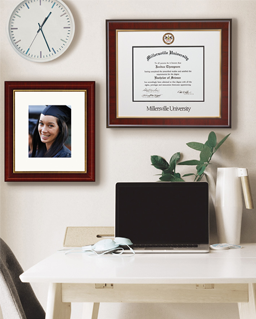
There’s pride in every step. Late nights studying. That first internship. The first project you shipped. Your diploma is the tangible reminder of where you started and how far you’ve come.
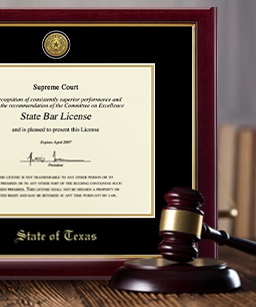
If you want a daily nudge to keep building on that foundation, consider framing your diploma. Choose a frame that fits your style and your story, so your education doesn’t just live in a drawer.