





There’s a simple move that can change how you approach your next big challenge: look back before you look ahead.
The Achievement Effect is the practice of deliberately acknowledging what you’ve already accomplished. That way, you can walk into tomorrow with steadier confidence.
It’s not about bragging or living in the past. It’s about treating your history like useful data. A real track record you can build on.
When you take stock of past wins, even tiny ones, you’re giving your brain evidence that you can handle hard things. That lifts motivation. It quiets anxious self-talk. And it nudges you to aim higher next time.
This page tackles what you need to know about the achievement effect. Read on to learn how to recognize past success to build your future confidence.
The Psychological Basis of Achievement Effect
Confidence doesn’t float in from nowhere. It grows from experience. From the small and large moments where you try and succeed.
Albert Bandura’s Self-Efficacy Theory is foundational here. He argued that a person’s belief in their capability strongly predicts performance, coupled with persistence and resilience.
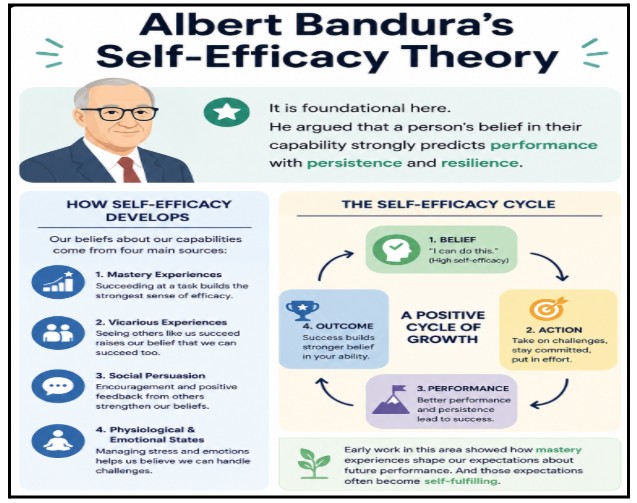
Early work in this area showed how mastery experiences shape our expectations about future performance. And guess what? Those expectations often become self-fulfilling. Bandura’s original paper, Self-efficacy: Toward a unifying theory of behavioral change, has become a cornerstone in psychology.
The Importance of Recognizing Past Achievements
Most of us are quick to downplay what we’ve done. We explain away promotions. We shrug off awards. And we chalk good results up to luck or timing. If you’ve ever thought, “Anyone could’ve done it,” you’re not alone. That habit erodes confidence and feeds impostor feelings.
Andrew Bates, COO at Bates Electric, sees the value of recognizing past accomplishments in an industry where each completed project represents skills and problems successfully handled.
Looking back at those wins can help business owners and teams recognize their capabilities. Rather than focusing only on what still needs to be done.
Bates explains, “In a business like electrical contracting, it’s easy to move from one project to the next without stopping to recognize what you’ve accomplished. But every successful installation and satisfied customer is evidence of your ability.
He adds, “Taking the time to acknowledge those wins reminds you and your team that you’ve handled challenges before. This gives you more confidence when the next one comes along.”
There’s research to support this shift in narrative: Studies show that structured self-reflection improves learning and performance.

In one field experiment, employees who spent 15 minutes reflecting at the end of the day improved their performance by 22.8% over the course of one month. That’s the compounding effect of noticing and encoding your progress.
On the impostor side, psychologists have documented how common these feelings are among high achievers. And how interventions like self-affirmation and evidence-based reflection can help people recalibrate their self-view.
How To Acknowledge Achievements for Building Confidence
Making recognition a habit doesn’t have to be complicated. Keep it simple, consistent, and visible. Here are five practical ways to acknowledge and celebrate your professional and/or academic achievements:
1. Write down one win each day
A success journal turns “I think I’m doing okay” into a record that’s hard to argue with.
That said, write down one win each day. Whether it’s a solved bug. A kind email from a client. Or a personal best on your running route.
2. Keep a running record of your progress
It’s recommended to turn achievement recognition into a documented routine. That said, keep a running record of wins like professional certifications and academic achievements. Both large and small.
A success journal turns fleeting accomplishments into a permanent resource you can draw on. On days when you feel like you’re falling behind, your journal gives you concrete evidence of how far you’ve come.
3. Revisit your wins when confidence dips
Your past achievements can become a source of confidence when your energy or motivation drops.
Flip back through your journal and remind yourself of what you’ve already accomplished. Seeing that record can make progress feel tangible rather than abstract.
4. Make achievements visible
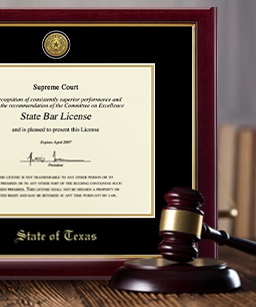
Physical and digital diplomas and certifications (even awards) aren’t just décor. They’re evidence of skill and grit, made visible.
Display a degree in your home office. Or frame a certification next to your desk as a quiet reminder of the effort that got you there. DiplomaFrame has a variety of options to choose from.
If you have medals or letters of recognition, consider creating a shadow box that tells the story behind them.
5. End the week with a short reflection
Build a 10-minute Friday reflection into your routine. Ask yourself:
- What did I learn?
- What did I finish?
- Where did I show up when I didn’t feel like it?
The goal isn’t to write a novel. It’s to spot patterns and recognize your effort. It’s giving yourself fair credit for the progress you made that week.
Using Past Success as a Springboard for Future Goals
Past wins aren’t museum pieces. Treat them like tools. Before you set the next goal, do a quick inventory:
- What strengths did you rely on to finish your degree?
- How did you structure your time when you prepped for that certification exam?
- What helped you deliver during your last big presentation?
Past achievements aren’t just milestones to look back on. They can be practical tools for setting and pursuing bigger goals.
Samuel Charmetant, Founder at ArtMajeur, sees this as especially relevant in the creative world, where artists and creative professionals often have to build confidence while taking on new projects, audiences, and opportunities.
Charmetant shares, “In the creative world, your past work can be one of your strongest sources of confidence. Looking back at the projects you’ve completed and the progress you’ve made gives you a clearer picture of what you’re capable of.
He concludes, “When you use that experience to shape your next goal, a bigger ambition feels less like a risk and more like the natural next step in your growth.”
Your environment can do some quiet coaching here. Place a framed diploma or certificate within your line of sight during planning sessions. DiplomaFrame can help you create and customize one or some for yourself.
That visual cue can prompt more ambitious goals. Why? Because it reminds you: you’ve done tough things already.
If you track goals digitally, add a note or photo from a prior success to your project board. It’s a friendly nudge from your past self to your present one.
Wrapping Up
The Achievement Effect is simple: remember what you’ve already done so you can believe in what you’re about to do. Psychology gives us the framework. However, your own life provides the evidence.
That said, keep a brief record of wins. Likewise, put meaningful credentials where they can nudge you forward. Lastly, share your achievements with humility and gratitude. When you plan the next step, open your highlight reel first.
Take five minutes today. Jot down three things you handled well this week. If you’ve got a diploma in a drawer, consider framing it and hanging it near your workspace. Give your future self a few more reasons to trust you.