








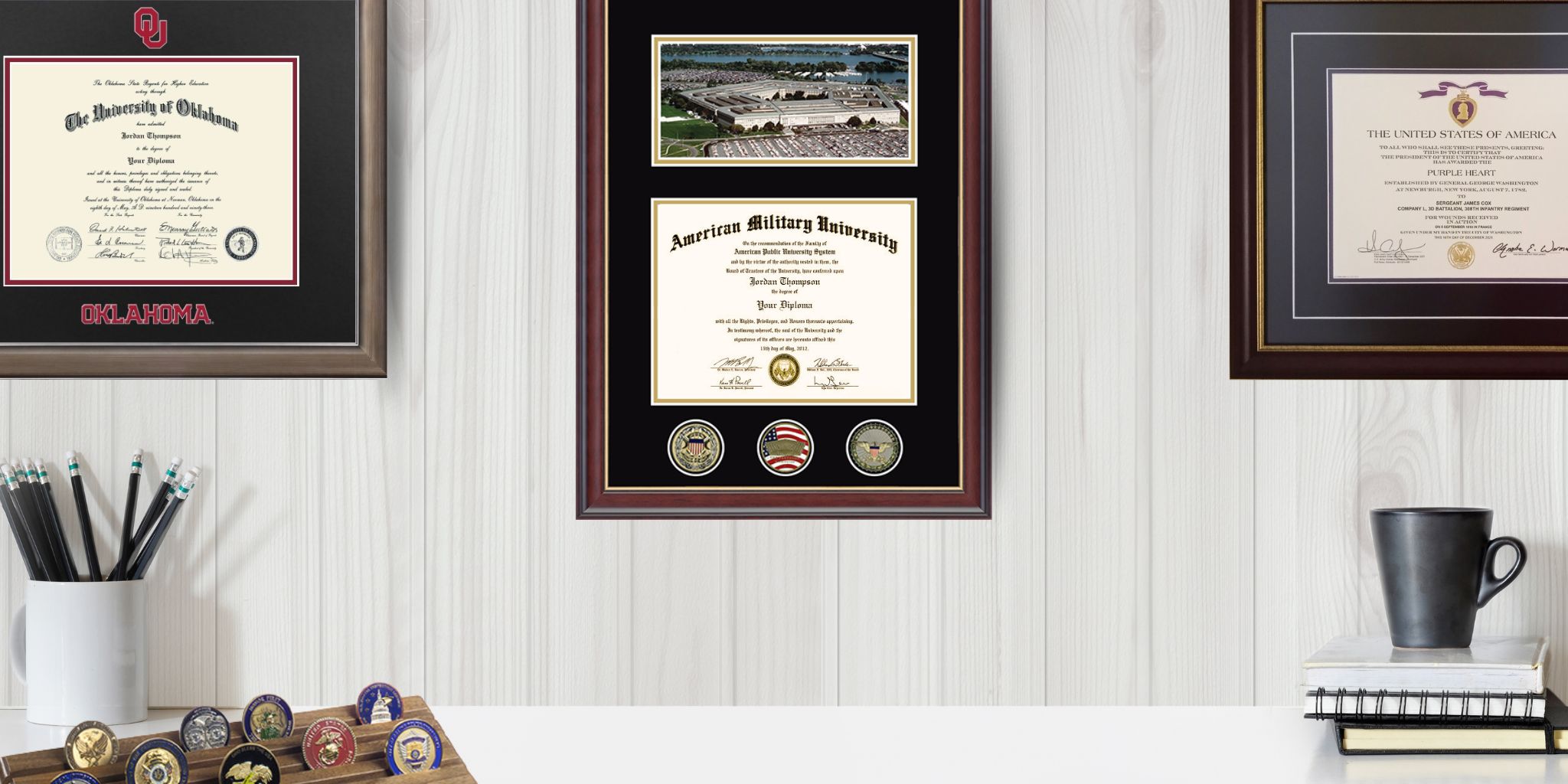
A diploma marks a single achievement. A personalized coin marks a different one. Many graduates and service members end up with both. The diploma comes from their academic institution; the coin from their unit, an officer, or a family member who wanted to mark the achievement. Displaying these together in one unified showcase tells a richer story than either piece alone.
The combined display works because it shows progression. A West Point diploma alongside the recipient’s first deployment coin reads differently from either piece in isolation. Many graduates source the coin side from specialists like Challenge Coins 4 Less personalized coins to mark transitions that the diploma alone can’t capture. The framework below covers what graduates and gift-givers should think about when designing the combined display. The same craft-and-presentation logic that runs through 12 Army graduation gifts they’ll love applies here too.
The bands reflect real-firm averages across diploma-frame specialists. Most graduates and gift-givers settle in the mid-tier range. The premium-and-heirloom tiers suit major life milestones (West Point graduation, retirement displays).
Why Does a Combined Diploma-and-Coin Display Work So Well?
Three structural reasons make the combination effective. The first is the narrative completeness. A diploma alone says “I completed this program.” A coin alone says “I served in this unit.” Together they cover both completion and application. The combined display tells the more complete story. The second is the visual variety. A framed diploma is rectangular, paper-based, and often runs to similar formats across institutions. A coin is round, metallic, and three-dimensional. The visual contrast creates a richer display than either format alone. The third is the family heirloom potential. A diploma-and-coin display passes down through generations as a single artifact that captures more of the recipient’s life than either piece in isolation. The display becomes meaningful in ways that single-format displays cannot match.What Should Buyers Verify Before Designing the Display?
Six items belong on every display-design shortlist.- The diploma frame size and style. Standard or custom dimensions
- The coin count. Single coin or multi-coin display
- The matting and glass. UV-protective glass for long-term preservation
- The mounting style. Single frame, side-by-side, or shadow-box design
- The text or plaque inclusion. Engraved name plate, citation, or dates
- The wall-or-shelf placement. Display location and orientation
Which Display Configurations Suit Which Recipients?
Five configurations recur across well-designed displays.- Diploma frame with embedded coin recess. Single frame, integrated coin display.
- Side-by-side dual frame. Diploma in one frame, coin display in adjacent frame.
- Shadow box composition. Diploma, coin(s), and additional memorabilia layered.
- Coin row beneath diploma. Diploma at top, horizontal coin row below within same frame.
- Standalone displays with matching aesthetic. Two pieces designed to complement.
What Errors Surface in Combined Display Design?
Five mistakes recur. The first is the size mismatch. A standard diploma frame paired with an undersized coin display reads off-balance. The visual proportions matter. The second is the glass choice. Standard glass without UV protection fades the diploma across years of light exposure. Museum-grade glass protects against fading and extends the display’s life meaningfully. The third is the wall-orientation gap. A horizontal diploma paired with a vertical coin display fights the eye. Matching orientations or a deliberate contrast both work; an accidental mismatch usually doesn’t. The fourth is the engraving overreach. Excessive text on the frame or plaque competes with the diploma and the coin itself. Restraint usually beats elaboration. The fifth is the coin-placement afterthought. The coin display benefits from the same design attention as the diploma frame. Cheap coin displays paired with quality diploma frames undermine the whole composition. The best Marine graduation gifts coverage reinforces the same point on the gifting side.Quick Reference: Combined Display Cost Bands
| Display Tier | Total Cost (USD) | Notes |
| Entry-level (basic frame + coin recess) | $80 to $200 | Standard sizing |
| Mid-tier (custom frame + coin display) | $200 to $500 | UV glass, custom matting |
| Premium (shadow box, multi-element) | $500 to $1,500 | Custom design |
| Heirloom-tier (museum-grade) | $1,500 to $5,000+ | Conservation-grade materials |
| Custom commission | $3,000+ | Bespoke design and craftsmanship |
What Recipients Most Often Receive Combined Displays?
Three recipient profiles recur across the category. Military service members are the most common. The combination of academy or training diploma with deployment coins, unit coins, and rank-promotion coins tells the full service story. Public-service professionals (police, firefighters, EMS) are the second most common. Graduation from training academy alongside service-milestone coins works similarly. Corporate-tenure recipients are the third. Long-service employees who received an MBA-or-equivalent diploma plus commemorative coins for major project milestones often combine the two for the home-office display.Pre-Order Checklist for Combined Display Buyers
- Measure the diploma before committing to frame dimensions
- Inventory the coin collection to plan multi-coin layouts
- Choose UV-protective glass for long-term preservation
- Plan the wall placement before final sizing
- Coordinate engraving content with the frame specialist
- Verify the coin display compatibility with the diploma frame
The Bottom Line for Combined Display Buyers
A diploma-and-coin combined display works when the design treats both pieces with equal care. The cost of getting it right is modest. The cost of mismatched components shows up every time the recipient looks at the wall. Recipients and gift-givers who plan the display deliberately usually end up with an artifact that anchors the room and tells the recipient’s story for decades. The combination outperforms either piece alone, and the design discipline rewards the upfront planning.Frequently Asked Questions
Can a Diploma and a Single Coin Be Displayed in One Frame?
Yes, in many cases. Frame specialists can design displays with a coin recess beneath or beside the diploma. The frame depth needs to accommodate the coin’s thickness, which usually requires a shadow-box-style construction.How Should Multiple Coins Be Arranged in a Combined Display?
Most multi-coin displays arrange the coins in chronological order across a horizontal row or a vertical column. Some recipients prefer grouping coins by deployment or unit. Both work; the choice depends on the story the recipient wants to tell.Are UV-Protective Glass and Conservation Mats Worth the Cost?
For displays that will hang in rooms with meaningful light exposure, yes. Standard glass and acidic mats fade diplomas and damage paper components across 10 to 20 years. UV glass and conservation mats extend the display’s effective life by decades.How Should the Display Be Sized for a Home Office or Hallway?
Most home-office displays work well in the 24-by-30-inch range. Hallway and entryway displays often suit slightly smaller dimensions (18-by-24 inches). The frame specialist usually advises on the right scale for the specific space.