
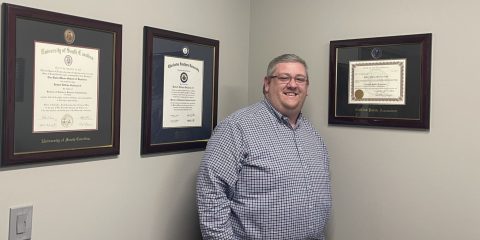
Credentials can make or break you in the world of employment. Whether you’re a fresh grad entering the workforce scene or a working professional already establishing your career, you have to strategically build and showcase your credentials for the long term. Doing so can seal the deal for your professional growth and career success!
Fret not—This page shares with you the types of credentials you can share as a working professional or job applicant. Read on to learn how to update and re-display your credentials, from graduation down to retirement.
Types of Credentials Worth Showcasing
Not all credentials carry the same weight. However, the right mix can reinforce your professional credibility and career story. That said, here are the ones worth displaying, whether online or offline:
- Academic degrees and honors: They are your foundation credentials (diplomas, Latin honors, thesis distinctions, and advanced degrees) that help establish your educational background. They are especially valuable early in your career or in fields where degrees still matter (law, healthcare, education, finance, etc.). It’s safe to say that your diploma is more than just a piece of paper!
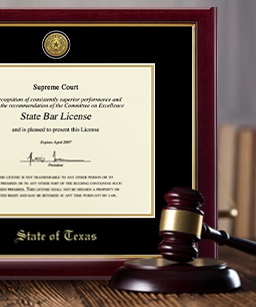
- Professional licenses and certifications: These are the “permission to practice” credentials (Bet you’re familiar with CPA, RN, PMP, real estate license, security clearance, trade licenses, and more). Since many of these expire, keeping them active (and of course, visible) shows you’re qualified and up-to-date as a working professional. This means that you can continue to work in your field of specialization.
- Skills-based micro-credentials: Think Coursera programs, Bootcamps, LinkedIn Learning badges, Google Career Certificates, HubSpot Academy, etc. These are perfect for proving modern skills, especially in tech, marketing, analytics, AI, and/or business. Nearly all employers (95%) say micro-credentials give candidates a better shot at getting hired, and 87% have actually chosen someone with one in the past year.
- Industry awards and recognitions: Consider accolades such as “Top 40 Under 40,” sales awards, innovation prizes, hall of fame inductions, Employee of the Year, and/or niche industry honors. These don’t just prove you participated; They prove you excelled in your field of endeavor!
- Professional affiliation membership: Belonging to organizations, such as SHRM, AMA, IEEE, ABA, ASCE, Toastmasters, and/or chamber boards, signals your professional credibility and ongoing engagement in your field. Bonus points if you’ve held committee or assumed leadership roles in one of these professional associations.
- Thought leadership: Take publications, keynote speaking, podcast guesting, patents, research contributions, advisory roles, books, for instance. They position you as a voice, not just a worker. They matter most in mid- to late-career, when expertise becomes part of your brand. In the employment world, nothing is more rewarding and fulfilling than being recognized as a thought leader in your industry.
How To Update Your Credentials Over Time
Credential attainment in the U.S. is steadily climbing. As of 2023, nearly 55% of working-age adults now hold a degree, certificate, and/or industry-recognized credential, up from almost 38% in 2008. Sure, it’s not the 60% goal yet, but the progress is clear and consistent.
But while achieving credentials is crucial for early employment, establishing them in the long run is equally essential for long-term professional growth and overall career success. This means that you have to update your credentials from time to time and re-display them when necessary. How do you go about doing so? Here’s how:
Early career (graduation-5 years)
For many professionals, graduation marks the beginning of a new chapter. Professions, such as medicine, law, and engineering, require ongoing learning to stay licensed and keep working. So, your wall of credentials is a living display.
A doctor, for example, starts with their MD. They grow their specialization and continue to add new certifications throughout their life. This reflects their growing expertise in areas such as virtual healthcare services and remote patient monitoring (RPM).
The message is clear: You’re fresh out of school, building your professional identity from the ground up. Your goal? Make every credential count. That said, here’s what to update and re-display:
- Display your academic credentials where they matter most. Add your degree, major, honors, and academic awards to your resume, LinkedIn, job applications, and personal website.
- Include GPA, coursework, and honor societies only when relevant. These details are helpful early on, but they gradually fade out once you’ve gained real work experience.
- Use internships and certifications, even projects, as proof of skill. When experience is limited, it’s best to showcase what you’ve done, not just what you studied.
- Start stacking micro-credentials. Entry-level certs (Google, HubSpot, CompTIA, LinkedIn Learning) boost credibility fast. The demand for technical skills requiring micro-credentials is growing in today’s business landscape.
- Position your credentials for entry-level roles. Tailor what you highlight based on the job. Be sure to get rid of anything that feels academic-only or outdated.
Paul McKee, Founder of ReadingDuck.com, recognizes the struggle of building professional credentials after graduation. However, he suggests focusing on academic credentials as a solid foundation.
McKee says, “Early in your career, your academic credentials are not just formality but proof of potential. As such, lead with the degrees, honors, training, and certifications you’ve earned, then layer in real-world experience as it comes. A strong academic foundation gives employers confidence while you build the rest of your professional story.”
Mid-career (5–20 years)
Now your career history matters more than your transcript. This stage is all about refreshing and realigning your credibility. At this point, a framed credential is a public promise that you have met a rigorous standard, especially in licensed fields. Most professionals trust this system in all parts of their lives.
Case in point: For a qualified electrician in St. Louis, it demonstrates to clients that you’ve established a critical standard of safety. Your own diploma, no matter the field, serves the same purpose. It tells a client or employer, “I have met the standard. I am a professional you can trust.”
But over time, you’ll want to update your credential displays so your skills don’t look obsolete. This time, show off your modern expertise with new frames. That said, here’s what to update and re-display:
- Get rid of outdated credentials. Delete high school awards, college club roles, and any expired certifications sitting on your resume “just because.”
- Shift the spotlight to industry certifications and accomplishments. Leadership training, major client wins, published work, promotions…These now carry more weight than your dean’s list. Remember: Continuous learning helps you stay relevant in your field post-graduation.
- Decide what to retire or refresh. Keep in mind: Some credentials need updates, some need upgrades, and some need to disappear.
- Use credentials to support your next move. Want a promotion? A leadership cert helps. Thinking about a pivot? Earn credentials that prove you’re serious. Then, update via social media for your career growth!
- Manage where you display credentials. Update resume, portfolio, LinkedIn headline, speaker bio, email signature. Each platform may need a different version of “you.”
Wang Dong, Founder at Vanswe Fitness, emphasizes the importance of building credentials during your mid-career. He had his fair share of experience in the physical education field before becoming the CEO of his fitness business.
Dong explains, “Mid-career is where credentials become strategy. This time, you’re no longer proving you can do the work, but you’re proving you can lead, innovate, and stay current. The professionals who keep learning and updating their expertise are the ones who stay competitive, no matter how the industry evolves.”
Late career (20+ years)
By the time you hit the 20+ year mark, you’re not just showing you can do the work. You’re showing you’ve influenced it. Your credentials shift from “proof of qualification” to “proof of authority.”
In high-trust fields like finance or law, credentials aren’t optional as they’re already part of your brand. That’s why advisors line their walls with framed certificates to reassure clients. This is especially true when guiding them through serious situations, such as finding a reputable Texas debt relief service.
At this stage, your diploma isn’t just a document; It’s marketing. That said, here’s what to update and re-display:
- Lead with experience-based credibility, not education. Your title and reputation matter more than where or when you graduated.
- Remove graduation years when necessary. It reduces age bias and keeps the focus on your expertise, not your age.
- Highlight honorary titles and lifetime awards. Fellowships, Hall of Fame honors, emeritus roles are your new “credentials of influence.”
- Showcase board seats, keynote speaking, mentorship, advisory roles. All these reflect thought leadership and industry authority.
- Use credentials strategically for consulting or semi-retirement roles. Your “proof” here isn’t degrees. Now, it’s decades of credibility.
Learn from Ryan Beattie, Director of Business Development at UK SARMs. He understood what it takes to establish credentials and build a career before he became a business development director.
Beattie shares, “Late in your career, your credentials stop being about qualification and start being about influence. At this point, the value is no longer in the degree itself but in the decades of expertise behind it. The professionals who showcase their impact are the ones who stay relevant long after others slow down.”
Retirement
Even after you leave full-time work, your credentials remain valuable. However, they just speak to a different kind of value. But that value you bring to the table remains legendary!
That said, here’s what to update and re-display:
- Use credentials to support encore roles. These roles include teaching, mentoring, consulting, volunteering. Experience still opens doors, even outside the corporate world.
- Update your bio for legacy roles. Think of alumni magazine features, nonprofit boards, author pages, speaking invitations.
- Decide what still matters and what to archive. Keep the greatest hits. Store the rest for personal history, not public display.
- Turn your credentials into thought capital. Books, interviews, webinars, masterclasses, mentorship programs matter. Your wisdom becomes the credential!
- Curate your legacy. Your credentials are no longer just career tools as they’re part of the story you leave behind.
Travis Lambert, General Manager at Central Oregon Heating, believes that your career journey continues even after you retire. He envisions how he’d like his retirement to be…still contributing to the industry as a thought leader.
Even if you stop working, Lambert justifies, “Retirement doesn’t end your professional story. This stage of your life just changes the platform. The credentials you’ve earned over a lifetime now become tools for teaching and mentoring to shape the next generation. Ultimately, your influence doesn’t retire just because you do.”
Best Practices for Re-displaying Your Credentials
Your credentials aren’t meant to stay tucked away in a folder. They should grow, shift, and reflect your current career stage. Whether it’s an achievement award you’ve received or the value of a business degree paying off years later, every credential tells part of your professional story.
The key is to keep them relevant, visible, prominent, and credible. That means knowing when to refresh and when to reframe (literally and figuratively). Here are some best practices for re-displaying your credentials:
- Keep a dedicated “credentials file” or digital portfolio. Store diplomas, certificates, licenses, transcripts, and award letters in archival-quality frames designed for long-term preservation. As an added measure, be sure to digitize everything and back it up.
- Track expiration dates and renewals of credentials. Many credentials aren’t permanent. Make a checklist or calendar reminder for renewals so nothing quietly lapses in the background.
- Use digital credential platforms. Modern tools, such as Credly and Accredible, let employers instantly verify your skills and certifications. Bonus: They look great on LinkedIn!
- Stay consistent across every channel. Your resume, LinkedIn profile, website, speaking bio, and even your email signature should all tell the same story. If a certification disappears in one place but not the others, it weakens your credibility.
- Decide when to update: Event-based vs. scheduled refresh.
- Trigger updates: You get a new job, earn a new credential, publish something, speak at an event.
- Yearly audit: Review everything at least once a year to archive, delete, update.
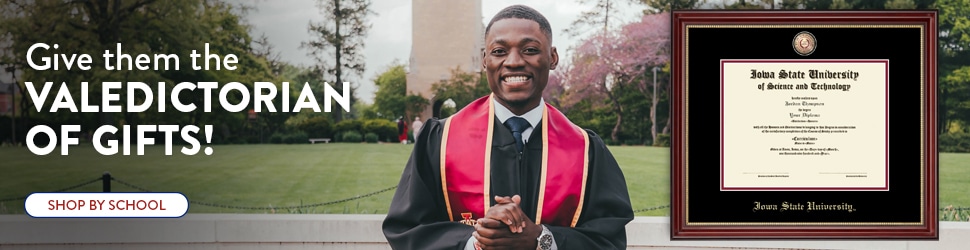
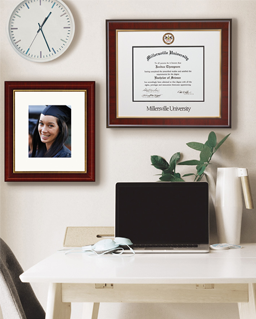
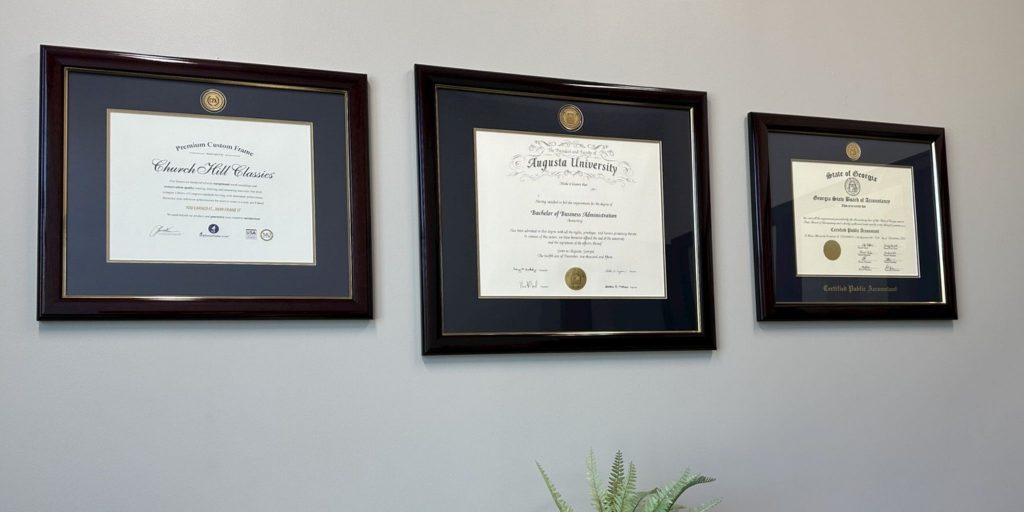
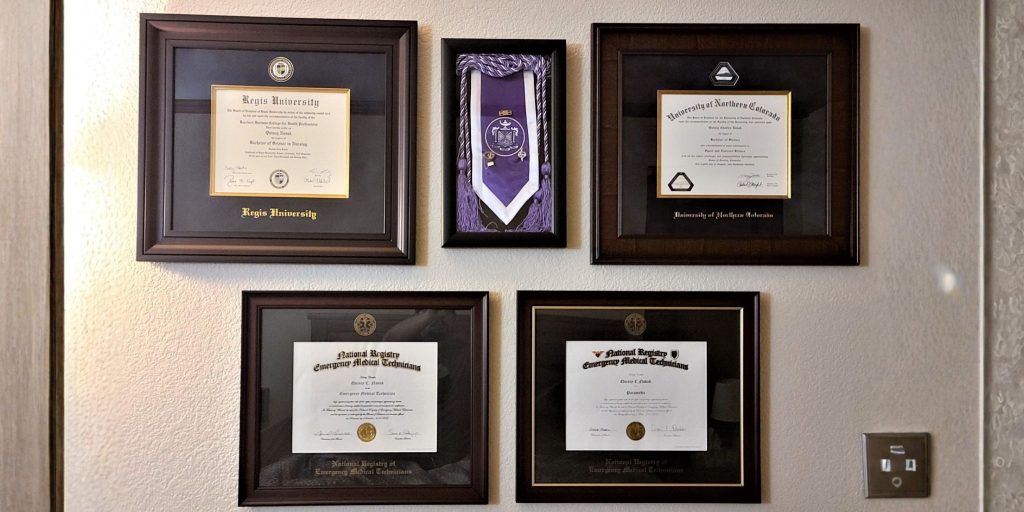
- Physically frame your credentials. A framed diploma, certification, or award isn’t just décor. It’s a visual reminder of your wins. Take Church Hill Classics’ custom document frame, allowing you to showcase your credentials. You can display them in your office, workspace, or home as both credibility and motivation.
Final Note
Your credentials play a crucial role in your professional growth and career success. That’s why you have to establish these in the long run, from your graduation down to your retirement. However, you have to make a conscious effort to update and re-display these as you go along the way. Start by recognizing the types of credentials you can build for yourself and share with others. More importantly, follow the key steps above for updating these credentials after graduation, in your mid- and late career, and upon retirement. All these will help you take a fulfilling and rewarding career journey! If you’re looking to display your credentials as a fresh grad, start by framing your diploma, certificates, and other key docs. Church Hill Classics offers custom frames for your important documents through its create-a-frame service.