





Career transitions are a fact of modern work. People change industries when their interests shift or their sector shrinks. Or a new opportunity looks too good to pass up. Sometimes it’s all three at once.
To add, layoffs and automation nudge folks to rethink what they want. Remote work opens doors across geography. And fast-moving fields like technology and healthcare keep drawing talent from everywhere.
If you’ve felt the pull to move into a new lane, you’re not alone. Research highlights just how quickly roles and required skills are changing.
The World Economic Forum estimates that nearly half of workers will need some level of reskilling in the coming years. Their latest analysis points to key growth areas like:
- data and information
- Artificial intelligence (AI) and machine learning
- Sustainability and green jobs
Don’t worry; This page tackles the role of academic credentials in career transitions. Read on to learn how to use your degree and certification to signal your expertise in your industry.
The Importance of Academic Credentials
In a transition, your past success doesn’t always translate on paper. Employers in a new industry may not recognize your old job titles or projects. That’s where academic credentials take center stage.
Degrees and certifications give hiring managers a familiar yardstick. They’re tangible proof you’ve studied the fundamentals. You’ve learned the vocabulary. You can handle the core tools.
Eric Yohay, CEO and Founder of Outbound Consulting, emphasizes the role of academic credentials in career transitions. He’s watched hundreds of people make the jump, and credentials keep coming up.
Yohay says, “Academic credentials create a common language between you and hiring managers in your target industry. When you’re coming from a different field, that MBA tells employers you’ve invested time understanding their business fundamentals. You go from being an outsider to someone who already gets it.”
Credentials can boost confidence, too. They offer structure and benchmarks. And while a degree isn’t a magic key, the data still shows it often pays.
According to the U.S. Bureau of Labor Statistics, higher levels of educational attainment are associated with lower unemployment and higher median weekly earnings. Your mileage may vary, but the pattern holds across large groups.

Types of Credentials Used in Career Transitions
Degrees
Degrees signal broad, durable knowledge. They’re a fit when you’re moving into roles that prize regulated expertise. Frame your degree to build trust!
Bachelor’s degrees can formalize a pivot into fields like business, marketing, accounting, or computer science. That is if you need foundational coursework. Master’s degrees often serve mid-career movers.
For instance, a journalist who completes a master’s in data science to move into analytics. Or a nurse earning a master’s in healthcare administration to step into operations leadership. Both are using advanced degrees to reset their trajectory.
Doctoral degrees are less common for quick transitions, but they carry weight for specialized roles. A PhD in human-computer interaction, for example, can open doors in UX research and/or product strategy.
Gavin Yi, CEO & Founder of Yijin Solution, highlights the value of a degree. He’s worked with various professionals in the manufacturing industry whose academic credentials have taken them to places in their careers.
Yi shares, “If you’re making a leap that demands deep theory plus applied skills, a degree can help you reset your narrative. It can demonstrate you can operate at a higher level.”
Certifications
Certifications shine when the target role is tool-specific or fast-evolving. They’re usually faster and cheaper than degrees, making them especially attractive during a transition. You see them everywhere in tech, finance, cybersecurity, cloud, and project management. Name it; they have it!
Take it from Jeffrey Zhou, CEO and Founder of Fig Loans. He understands the value of certifications in the finance industry for career transition and professional development.
Zhou explains, “Certifications show commitment and up-to-date knowledge in a fast-moving industry. When I see credentials like CFA, CPA, or FRM on a candidate’s resume, I know they understand the financial concepts and standards we rely on daily. That practical knowledge often matters more than where they worked before.”
A few well-known examples:
- Cloud: AWS and Google Cloud certifications validate hands-on skills with services employers use every day.
- Cybersecurity: CompTIA Security+ or (ISC) )²’s CC helps newcomers prove baseline competence.
- Project Management: PMP and CAPM remain strong signals across many industries.
- Finance: The CFA pathway is rigorous but powerful for investment or research roles.
These credentials can be stacked and sequenced to tell a clear story about your growing expertise.
How To Leverage Academic Credentials for Career Transitions
Academic credentials can open doors, but only if you use them strategically. It’s not just about earning them. It’s about how you position and present them.
Think of using diplomas and certificates in your LinkedIn profile, for instance. They highlight real, job-ready skills. Done right, your credentials become proof of what you can do. Not just what you’ve studied!
Here’s how to use your academic credentials to transition your career:
1. Make strategic education choices
Picking the right program matters more than you’d think. You want relevance and return on investment (ROI).
Before you enroll in anything, clarify what the target roles actually require. Pull ten job postings and highlight the repeated skills. Likewise, map them to courses or certifications.
Learn from Wade O’Shea, Founder of BusCharter.com.au. He guides employees for his bus charter business on making educational investments to kick their careers up a notch.
O’Shea suggests, “Start with a clear gap analysis between your current skills and your target role’s requirements. Focus your educational investments on filling those specific gaps rather than pursuing broad credentials. A targeted certificate program that directly addresses missing competencies often delivers faster results than a general degree.”
Practical notes:
- Time: Choose formats that match your life. Evening classes would work. Even online cohorts or self-paced modules can make a difference.
- Cost: Compare the price per skill learned. Look for scholarships and employer tuition assistance. Many companies offer education benefits you can use.
- Proof: Go for programs that include capstones, labs, or externships, so you graduate with real projects to show.
2. Market your credentials
Earning the credential is step one. Making sure people notice is step two. You even have to update and re-display your credentials over time.
Take it from Nick Wiese, Regional Vice President at Alpha Heating & Air. He sees the need to market your academic credentials for a career transition. He has his fair share of experience doing so before he assumed an executive position.
Wiese recommends, “Don’t just list your credentials…Show how you’ve used them. Highlight real projects and results that connect directly to the roles you’re targeting. When employers can see the impact of what you’ve learned, your transition feels much more credible.”
Key steps to take:
- Adding relevant coursework and project outcomes to your resume, not just the credential name
- Updating LinkedIn’s Licenses & Certifications and feature project links
- Including keywords that match target job postings
- Using digital badges when available to verify your credentials and link to evidence of your skills
- Talking about how you applied new knowledge (A portfolio or GitHub repo beats a bullet point every time)
- Asking instructors or cohort peers for brief recommendations focused on your new competencies
The Evolving Role of Academic Credentials
The credential world is changing fast. Many employers say they’re moving toward skills-first hiring, focusing on what you can do rather than where you did it. That’s according to LinkedIn’s Workplace Learning Report.

At the same time, new tools make it easier to verify learning at a granular level. From digital badges to interoperable, portable records of your achievements.
Sixin Zhou, Marketing Manager at LDShop, champions the shift toward competency-based credentialing. He’s seen several micro-credential programs that help professionals demonstrate specific abilities rather than broad knowledge.
Zhou predicts, “We’re moving toward skill-specific credentials that professionals can combine like building blocks. You could earn five targeted micro-credentials that precisely match an employer’s needs, rather than earning one large degree. This approach gives career changers more flexibility and faster pathways to demonstrate relevant expertise.”
Stackable options can accelerate a transition without asking you to pause your life for two years.
For example, in specialized areas such as TRT online, professionals can earn focused certifications in telehealth protocols, patient screening, remote monitoring, and regulatory compliance. Then, they can stack them into broader healthcare or medical credentials over time. This mix of flexibility and recognition is a big deal for career changers.
Final Note
When you step into a new field, academic credentials help you speak the language and show your work.
Degrees anchor broad transitions where depth and theory matter. Meanwhile, certifications prove tool-specific skills and currency. What really works is combining either one with projects and practice. Not to mention a story that connects your past to your future.
If you’re mapping your next move, start with a clear gap analysis and choose education that closes those gaps. Make sure your resume and portfolio highlight how you’ve applied what you learned.
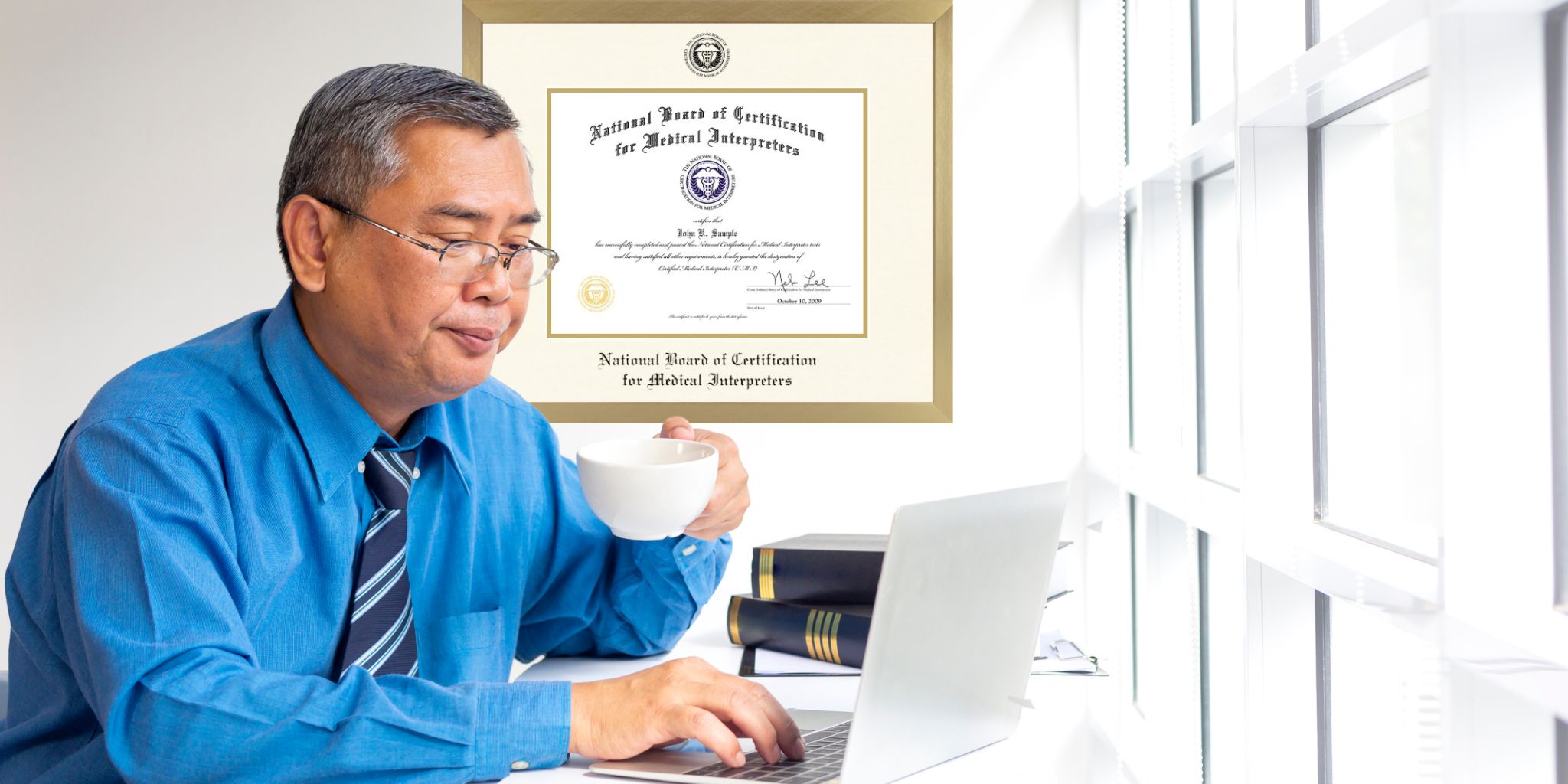
And when you earn that new credential, take a minute to celebrate it. Put the letters after your name where they belong. Share the badge. Even display the diploma with the right frame—shop now!