




Most students think of college as exams and grades. Employers think about it differently. What they’re looking for isn’t a GPA, it’s evidence of what a person can actually do. That evidence usually comes from projects: capstone work, research contributions, group leadership, competition entries. These are the experiences that translate most directly from college to career, and students often underrepresent them.
The Capstone Project
A capstone is the closest most undergraduates get to real professional work. It’s built around an actual problem—a business challenge, a design brief, a policy question—and it takes weeks or months to complete. The output is something you can show someone.
Employers who recruit from campus mention capstone work consistently as one of the most credible signals in an interview. Unlike a GPA, a capstone shows how a student approaches a problem, organizes their thinking, and communicates conclusions. It’s a work sample, not just a grade.
What makes capstone projects stand out on a resume:
- They demonstrate project management over a real timeline
- They often involve external stakeholders or real data, not hypothetical scenarios
- They produce something tangible—a report, a prototype, a presentation
- They show depth in a specific area rather than general course coverage
The Written Work Behind the Projects
Research papers, capstone reports, and project proposals all require a specific kind of writing that many students find hard to develop quickly. Academic writing has its own conventions—citation formats, argument structure, evidence standards – that aren’t always taught explicitly.
Students who are strong researchers but weaker writers sometimes find that the written component doesn’t reflect the quality of the underlying work. Getting that gap closed by turning to an essay writing service means the thinking and research can stay with the student, while an experienced writer contributes the clarity and structure the work deserves. For students who want their paper to read the way it should, that kind of support is a practical option, not a shortcut.
Research and Publications
Undergraduate research is more common than it used to be, but many students who participate don’t fully leverage it. Contributing to a faculty research project—even in a supporting role—signals something most coursework can’t: the ability to work with primary sources, handle ambiguity, and contribute to something larger than a single assignment.
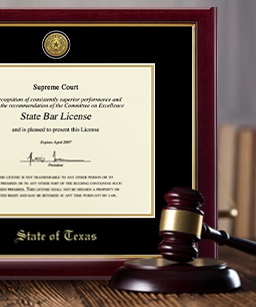
Published research, conference presentations, and departmental recognition are credentials that sit separately from the degree itself. They’re worth documenting carefully. When recognition takes a physical form, it’s worth displaying too.
Group Projects and Leadership Roles
Group work has a reputation for being messy. It’s also the part that most closely mirrors how professional environments actually function. A student who led a group project—who coordinated timelines, resolved disagreements, and delivered a finished product on deadline—has demonstrated something a solo essay can’t.
How you describe group work matters. “We did a project” and “I coordinated a four-person team and presented the final deliverable to a client panel” are not the same thing, even if the project was identical. Leadership roles within group work are worth documenting explicitly—in resumes, portfolios, and interviews.
Competitions, Awards, and Recognition
Campus competitions produce credentials that exist independently of coursework grades. Winning or placing in a business case competition, design challenge, or research award, according to Tefler Knowledge Hub, demonstrates performance under external evaluation – which carries different weight than a grade from a person who knows you.
Why Physical Recognition Still Matters
Certificates and awards have a way of being filed away and forgotten. That’s a missed opportunity. A certificate from an honor society, a departmental award, or recognition from a capstone review panel represents a specific achievement—one that took real effort.
Framing academic and professional recognition isn’t nostalgia. Having a visible reminder of what you’ve accomplished—in a workspace or office—that communicates something to clients, colleagues, and employers who see it. The students who treat early credentials as worth displaying tend to build professional environments that reflect their track record from day one.
What Employers Actually Look at in Portfolios
Type of Work | What It Demonstrates | How to Present It |
Capstone project | Problem-solving, sustained effort | Written report + executive summary |
Research contribution | Analytical thinking, rigor | Publication credit, faculty reference |
Competition result | External validation | Certificate, ranking, brief description |
Leadership in group work | Coordination, communication | Specific role description, deliverable |
Published or recognized writing | Communication skill | Link, citation, or print copy |
After Graduation
The transition out of college is when the work students did has to speak for itself. A resume is a summary; the projects, papers, and recognitions behind it are the substance. Students who have documented their work carefully and can articulate what they produced tend to enter the job market with a clearer story to tell.
That story starts forming early. The projects that feel like assignments during the semester are often the experiences that define what a student can do. Treating them as such—building a portfolio, preserving the documentation, framing the recognition—is a habit worth starting before graduation, not after.