






Entering the job market now does not look much like it did ten years ago. A degree still matters, of course, but it is no longer the whole story. Employers are scanning for more than academic background, and a graduate’s mix of credentials often says as much as the major itself. Language learning has moved well past the old “nice extra” category. It now reads as something more serious: a sign of adaptability, cultural awareness, and the kind of long-game thinking employers tend to notice when they are weighing candidates in a crowded field.
Why Language Skills Now Count as Career Capital
Part of that shift comes from what language learning quietly reveals. Getting through a second language is rarely smooth. You forget words, miss cues, sound awkward, and keep going anyway. That process tells employers quite a bit. It points to patience, adaptability, and the ability to function when things do not feel natural yet.
That is also why language study does not compete with a traditional degree. It sharpens it. A business graduate who speaks Mandarin, or an engineering graduate who can confidently work in Spanish, has not stepped away from the core qualification. They have made it more flexible. The degree still anchors the profile, but language ability lets it stretch further.
Employers have started saying this more clearly. Multilingual candidates often come across as better communicators, more aware of other perspectives, and more capable of working across cultural contexts. Those qualities matter once the actual work starts. Language proficiency does not just make a résumé more interesting. It makes the candidate look better equipped for how modern workplaces actually operate.
For graduates building their mix of credentials, that carries weight. Language ability does not replace existing qualifications. It strengthens what is already there. It signals curiosity, persistence, and a kind of professional adaptability that a GPA or degree title cannot fully show on its own.
How Multilingual Graduates Stand Out to Employers
Language ability does more than occupy one neat line on a résumé. It changes the way employers read the rest of the profile, and that shift in perception can shape hiring decisions more than graduates sometimes realize.
What Employers Actually Read into Language Skills
When a hiring manager sees a second language on a résumé, they are usually not thinking about literal translation. They are reading something broader into it. They see a person who can handle ambiguity, move between cultural contexts, and communicate in settings where the same script will not work every time.
That interpretation matters because those are difficult qualities to teach quickly. Research on bilingual wage premiums suggests that language ability carries real labor-market value, which reflects the communication and cognitive advantages employers associate with multilingual candidates.
The effect is not random. It tends to show up most clearly in roles that involve clients, regional coordination, or teams spread across markets, which makes sense. Those are exactly the environments where language skills stop looking decorative and start looking practical.
Where the Demand Shows Up Most Clearly
Demand for multilingual candidates is not limited to one industry or one type of role. It appears across the economy, sometimes loudly, sometimes in ways that only become obvious when two similar candidates are being compared side by side.
Sectors where bilingual and multilingual ability can create a real edge include:
- Business and international trade, where English, Spanish, and Mandarin still matter across some of the world’s biggest markets
- Healthcare, where language differences can affect both patient confidence and quality of care
- Education and diplomacy, where French and Spanish remain widely useful alongside English
- Customer-facing and service roles, where regional language skills often make communication feel easier and more natural
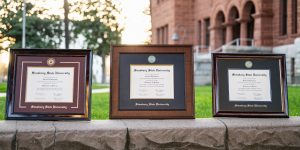
There is one catch: language ability fades if it is not used. It works more like a living credential than a static achievement. The same is true of many professional qualifications, which often need to be revisited, updated, and presented in ways that still fit the stage of career someone is in — something reflected in this piece on how credentials can be updated and re-displayed over time. Graduates who keep practicing through work, conversation, tutoring, or platforms like Langua are far more likely to hold onto the value that language learning creates.
What Language Learning Builds Beyond the Résumé
The career case for language learning gets most of the attention, but that is only part of the picture. A second language builds things that do not stay boxed inside one job title. The benefits spill into problem-solving, communication, and adaptability in ways that hold up across industries and across time.
Sharper Thinking and Problem Solving
Learning another language is not just about adding more words. It is closer to learning how to think while slightly off balance. The brain has to switch between systems, catch small signals, and keep going even when the meaning has not fully clicked yet.
That repeated effort can build something useful. Memory gets stretched. Focus gets cleaner. The mind gets better at staying flexible when the obvious answer is not right there. People who have put real time into another language often seem a little harder to rattle in unfamiliar situations. They are used to not having total clarity at the start.
That kind of adaptability is not field-specific. It applies whether someone is analyzing data, managing a project, or navigating a difficult client conversation.
Cultural Fluency That Improves Collaboration
Language study does more than teach vocabulary. It changes how people notice communication. Once someone starts learning how another language handles tone, disagreement, formality, humor, or indirectness, they are also learning how people shape meaning differently from one culture to another.
That shows up at work. In mixed teams and diverse environments, collaboration is easier when someone can catch nuance instead of flattening every interaction into the same communication style. Multilingualism often builds empathy without making a big show of it. Thinking across cultural lines makes it a lot harder to assume your own way is the obvious one.
That matters well beyond a graduate’s first role. These are not strengths that expire after one job change. They travel.
Why AI Makes Human Fluency More Valuable
AI translation tools have gotten good. Really good, in some cases. Ignoring that would be silly. A graduate can paste a foreign-language email into a tool, click once, and get something readable back in seconds. That has changed the floor. Basic comprehension is easier now than it used to be.
That still leaves a much bigger advantage untouched.
Fluency is not the same thing as conversion. AI is useful at turning one language into another. What it still misses, or flattens, is the human part. Tone gets dulled. Humor goes strange. Subtext turns slippery. A phrase may come out accurate on paper and still sound off, cold, too blunt, too formal, or just badly timed. A fluent speaker knows how to adjust before that happens.
That difference becomes obvious when the conversation carries real weight. In interviews, negotiations, client calls, or sensitive one-on-one exchanges, people care about more than the dictionary meaning of a sentence. They care about how it lands. They care about trust. They care about whether the person on the other side sounds natural, thoughtful, and real. AI can help decode language. It cannot replace presence.
There is also a practical point here. In workplaces already saturated with AI tools, employers do not need more people who can simply run language through software. They need people who can interpret uncertainty, shift register, and communicate in a way that feels human on both sides. Language learning builds exactly that.
Multilingual graduates are not in competition with AI on this front. They are bringing something AI still cannot supply: the human layer that makes communication work in real settings.
Practical Ways to Turn Language Study into a Credential
Knowing a language and proving it are not the same thing. That gap matters. The encouraging part is that graduates do not need an elaborate plan to close it. With some intention, language ability can be made visible in ways employers actually recognize.
Choose a Path That Fits Your Goals
Not every graduate needs the same learning setup. Some people need deadlines, structure, and a course they can follow from week to week. Others do better when they can study in shorter bursts, on their own schedule, without forcing the whole process into an academic format. The best path is usually not the most ambitious-looking one. It is the one a person can actually keep doing when work gets busy and life starts crowding in.
At some point, though, the language has to leave the page. That is when things change. Conversation practice, tutoring, and language exchange tend to move people forward in a different way because they force real-time thinking. You stop polishing silent answers in your head and start dealing with the language as it comes. For graduates who have the chance, living, studying, or working abroad can speed that up even more.
It also helps to choose a language for reasons stronger than status. Mandarin, Spanish, French, and English all have obvious career value, but the best long-term choice is usually the one that fits both the professional goal and the person. Geography matters. Industry matters. Interest matters too. A language is much easier to stick with when it does not feel like a chore you chose because it sounded strategic.
Show Proof of Proficiency in Visible Ways
Language ability only functions as a credential when other people can see it clearly enough to trust it. Formal certifications can help a lot here. Credentials such as the DELF for French, the HSK for Mandarin, or the DELE for Spanish give employers something standardized to work with, which is far stronger than a vague self-rating.
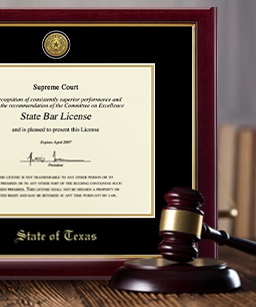
Graduates can also make their language skills more legible through practical proof: bilingual work samples, translated materials, résumé entries with honest proficiency levels, and professional profiles that show verified achievements. Presentation matters. The way a person displays their qualifications sends a message about how seriously they take them, which is part of why visible presentation tools like professional certificate and license frames continue to matter in professional settings.
The aim is not to oversell. It is to make the credential credible.
Language Learning Belongs in a Graduate Toolkit
The graduates who adapt best are rarely the ones who stop building the moment they leave university. Multilingualism has become more than a résumé extra. It signals sustained investment in a set of human capabilities that formal education alone does not always prove.
Career growth increasingly rewards people who can move across contexts, communicate with precision, and connect across cultural lines without losing clarity. Language learning builds all three, and it tends to do so quietly, over time.
That is the real takeaway here. In a competitive market, the graduates who stand out are often the ones who combine their core qualification with skills that travel. Language proficiency is one of the few credentials that keeps getting more valuable the longer it is actually used.