

Hiring has always moved in cycles. But artificial intelligence (AI) has dramatically accelerated the timeline.
Today’s recruiting teams use algorithms to source candidates and parse resumes. They leverage these to assess skills faster than any human team could manage. That speed brings consistency. AI screens thousands of applications using the same criteria every time.
According to the Society for Human Resource Management (SHRM), recruiters are using AI to automate screening and improve candidate matching. This frees up time for the conversations where personal judgment actually matters.
With this kind of speed, hiring becomes more data-driven than ever. Skills and experiences become the raw ingredients AI uses to sort and score. That’s why resumes need to deliver structured, scannable signals.
And right now, one of the clearest signals? Professional certifications. Read on to find out why they matter now more than ever before.
The Growing Importance of Professional Certifications
Professional certifications are credentials you earn by passing an exam and/or assessment from a recognized body. Unlike degrees, which cover broader education, certifications focus on job-ready skills. For instance:
- Artificial intelligence (AI)
- Cloud architecture
- Software development
- Data privacy
- Network security
- Project management
Even a doctor’s or master’s degree in education programs for working professionals count as professional certifications.
These credentials used to be nice differentiators. Now that AI screens thousands of resumes in seconds, they’ve become a reliable shorthand for proven competency.
Take it from Gregor Emmian, Deputy Chief Digital Growth Officer at Rise. He sees this shift shaping how companies evaluate talent in increasingly digital hiring environments.
Emmian says, “As hiring becomes more automated, certifications help candidates communicate credibility quickly. They give employers and AI screening systems clearer signals about current skills and technical readiness. Even a candidate’s commitment to continuous learning.”
That “universal language” matters because certifications show you’ve met a rigorous standard and that you’re committed to learning in a field that doesn’t stand still.
The Role of Professional Certifications in AI Algorithms
Applicant tracking systems (ATS) and AI screening tools parse resumes for structured data like:
- Titles
- Employers
- Skillsets
- Academic credentials.
When they find certifications, they don’t just log the acronym. They often evaluate relevance to the role. They review the issuing organization and the age of the certification.
Systems can check for exact matches against job requirements or preferred qualifications. They use those matches to boost a candidate’s score. If your certification aligns with the job’s tech stack or regulatory requirements, you move up in the list.
Learn from Hong Zhou Jin, CEO of eSign.AI. He sees firsthand how AI systems prioritize verified and structured candidate data during the hiring process.
Jin explains, “AI-driven hiring systems rely heavily on verifiable signals. Certifications help candidates stand out by providing standardized proof of skills. That algorithm can easily validate and match against job requirements.”
In-Demand Certifications in the AI Era
Some credentials carry more weight because they map directly to scarce, high-impact skills. In the AI era, here are in-demand professional certifications to consider for various industries.
For those pursuing credentials in network security specifically, understanding how modern cloud security frameworks are evolving is essential — including how organizations evaluate SSE vendors to consolidate threat protection, zero trust access, and secure web gateways under one platform as part of their broader infrastructure decisions.

Jason Ledbetter, Operator at Jason Ledbetter, has observed growing demand for certifications that validate job-ready skills across technical and business-focused roles.
Ledbetter explains, “The certifications that stand out most today are the ones tied to real business needs and measurable technical skills. Employers want credentials that demonstrate candidates can work with current platforms and contribute immediately in fast-changing industries shaped by AI and automation.”

Pros and Cons of Certifications for Candidates
Key benefits
If AI is the gatekeeper, certifications open doors:
- Applicant visibility: They increase your visibility in automated screenings by matching job requirements with standardized credentials.
- Work preparedness: They signal job readiness and reduce perceived risk for employers.
- Negotiation standing: They strengthen your negotiation position for pay and scope. Especially when paired with current, in-demand skills.
- Career transition: They support career pivots by offering structured proof that you can do the work. Even if your last title doesn’t reflect your new direction.
Rawad Baroud, CEO of ZeroGPT explains how structured credentials are becoming increasingly important in AI-driven evaluation systems.
Baroud shares, “As hiring systems become more automated, the quality of signals in a candidate’s profile matters more than ever. Certifications provide verifiable indicators of skill that reduce ambiguity for both recruiters and AI systems.
He adds, “In an environment where algorithms filter candidates at scale, clarity and verification are what help talent stand out.”
Surveys of certified professionals frequently report improved employment outcomes after earning a credential. More interviews, faster promotions, pay increases.
Challenges and considerations
Certifications aren’t perfect:
- They cost money and time.
- Not all credentials carry the same weight.
Check whether an exam aligns with widely used tools or frameworks in your target roles. Tech moves quickly, so certification value can fade without maintenance.
Zaheer Dodhia, CEO of Hummingbird International, highlights that certifications are most effective when viewed as part of a broader, continuously evolving skill set.
Dodhia notes, “Certifications are valuable because they validate foundational knowledge. But they shouldn’t be seen as the end goal. In fast-changing industries shaped by AI and automation, employers look for professionals who combine certified knowledge with adaptability and real-world application.”
He concludes, “The strongest candidates are those who keep learning beyond the certification itself.”
Equity matters, too:
- Employers can widen access by offering study time and mentoring.
- Candidates can reduce costs through official study paths and open educational resources.
Keep a balanced view. Hands-on experience, portfolios, strong references, and other attributes still carry real weight. Professional certifications should complement the proof that you can do the job.
Final Words
AI changed how resumes are read. However, great hiring still depends on relevance and readiness. Certifications make those qualities visible quickly at scale. Especially when algorithms handle the first screening pass.
If you’re job hunting, pick credentials that match your target roles and keep them up to date.
To begin, scan 20–30 job postings in your field and note which certifications appear most often. Pick one or two that align with your interests and market demand. Also, choose industry-recognized issuers and track renewal timelines. Lastly, add digital badges to your resume and LinkedIn profile.
With these steps, certifications can help you stand out and land your next job.
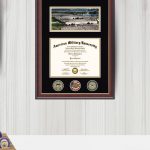
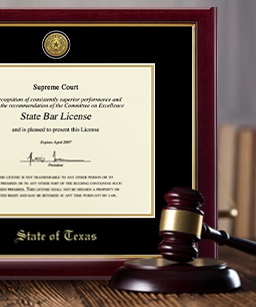
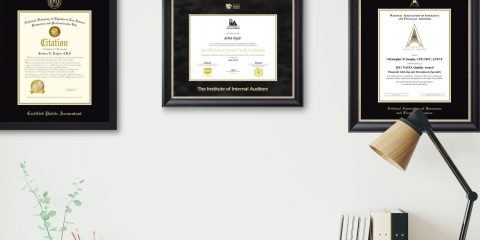
When you earn a certification that changes your career trajectory, you should mark the moment. Display it in your workspace. In your video interview background. Or where you’ll see it during tough weeks.
Ready to showcase what you’ve earned? Professional framing makes your achievement visible and tangible. At diplomaframe.com, they work with professionals who want to properly preserve and display their credentials. Shop today for the right frame!