




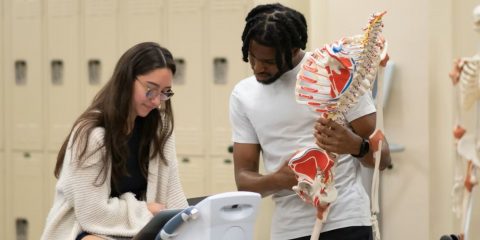
Many healthcare students enter clinical rotations expecting that their years of study will translate smoothly into real-world competence. However, the reality often feels very different. It can be a truly stressful and challenging experience to find your feet in healthcare.
One meta-analysis of 112 studies covering 42,331 healthcare students across 43 countries found that 41% experienced some level of unspecified anxiety symptoms. Similarly, 22% experienced moderate anxiety. It’s a fact that clinical environments introduce uncertainty, time pressure, and real consequences, all of which can make even well-prepared students hesitate.
This combination of low confidence and elevated anxiety shapes how students perform during clinicals. What can healthcare students do to get better at dealing with real patients in high-stress environments? Let’s find out below.
#1. Stop Waiting To Feel Ready and Start Building Exposure
The thing about confidence is that it tends to develop through repeated exposure rather than preparation alone. Many students spend the early phase of clinical rotations observing quietly, waiting until they feel ready to participate more actively. Unfortunately, this approach often slows down confidence-building because real improvement depends on engagement.
Data proves this as well. According to a 2024 study, medical students frequently report low confidence in their procedural and hands-on skills before beginning real clinical work. However, what seemed to end up making a difference was peer-led training sessions.
Peer-led environments offer a useful bridge between theory and practice because they reduce pressure while still allowing active participation. Students often feel more comfortable making mistakes and refining their skills in these settings. Thus, seeking out such opportunities can do a lot to accelerate early confidence gains.
It also goes without saying that progress during clinicals often comes from consistent, low-stakes involvement. Each interaction adds familiarity, and over time, the hesitation goes away, and you build a stronger sense of capability in real clinical situations.
#2. Be Intentional About Your Clinical Experience
The environment in which clinical training takes place has a strong influence on how quickly confidence develops. Some rotations provide frequent patient interaction, open communication, and consistent guidance. Others may limit opportunities for active participation. These differences tend to shape how comfortable students feel when applying their skills.
The good news is that it does get better. By the third year, medical students reported noticeably higher confidence in their communication skills. This was especially seen when it came to asking and answering questions. They also noted that rotations in emergency medicine, primary care, and family medicine offered the highest satisfaction with their communication training.
This shouldn’t be surprising. Environments that encourage interaction and discussion tend to support faster growth. It’s also why, among nursing students, one of the most important factors in gaining experience is choosing a preceptor for clinicals. This is because the level of guidance, feedback, and openness to questions can vary widely between mentors.
That said, as ClickClinicals explains, good preceptors can be hard to find, and many students now pay placement services to find experienced ones. The pros of doing so are obvious. You eliminate the long wait times and don’t experience delays with graduation.
On the ground level, a supportive preceptor can create a setting where students feel comfortable engaging, asking questions, and learning from mistakes. This is why being selective about learning environments can help you gain consistent exposure and develop confidence in a more supportive way.
#3. Use Structured Practice To Strengthen Decision-Making
Confidence also improves when students practice in environments that allow them to focus on decision-making without the fear of harming real patients. Structured training settings, such as simulations, are a great way to apply knowledge and learn from mistakes in a controlled way.
Students exploring non-clinical pathways can also consider diploma programs for healthcare careers in Texas, such as medical billing and coding which blend coursework with hands-on practice to strengthen applied skills.
Among nursing students using high-fidelity simulation, 98.9% strongly agreed that it enhanced their learning. Likewise, 97.2% said it developed their clinical reasoning skills, and 96.9% reported that it developed their clinical decision-making ability.
Of course, students who approach simulations with intention tend to benefit more from them. It helps to treat these sessions as a realistic scenario where you role-play even the emotions you might feel in a crisis. Only then can you reflect and identify areas for improvement in terms of your competence and confidence.
Frequently Asked Questions
1. How long does it take to feel confident during clinical rotations?
Most students start feeling more comfortable after a few weeks, but real confidence usually builds over several months. It depends on how actively you engage, the type of rotation, and your learning environment. By later rotations, many students notice a clear shift in how naturally they handle situations.
2. What happens if you struggle during clinicals?
Struggling during clinicals is pretty common, especially early on. In most cases, instructors or preceptors step in with guidance, feedback, or extra support. It’s seen as part of the learning process, not failure. What matters more is how you respond, ask for help, and improve over time.
3. How should students communicate with difficult patients?
Start by staying calm and not taking things personally. Patients may be stressed, scared, or in pain. Listen carefully, acknowledge their concerns, and keep your tone respectful. If things escalate, involve a supervisor. Over time, you’ll get better at reading situations and responding more confidently.
All things considered, gaining confidence isn’t going to happen overnight. Many students often assume it will follow automatically from knowledge, but clinical settings demand something more adaptive. They require comfort with ambiguity, the ability to act without perfect certainty, and a willingness to stay engaged even when outcomes are unclear.
These qualities develop through participation and reflection, and not passive observation. Thankfully, over time, interactions will become smoother, questions will come more naturally, and your clinical reasoning will feel less forced. You just need to navigate enough real situations to trust your ability to handle anything.