


Graduation is essentially a final handshake. After that, nobody tells you where to stand.
For a while, that feels like a problem. Then it starts to feel like permission.
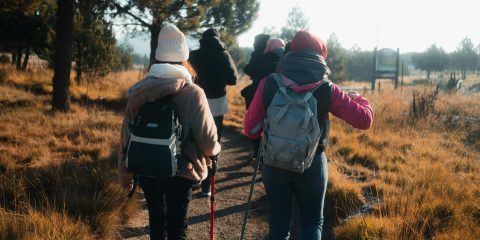
Most people close the gap quickly. Applications, interviews, routines stitched together before the silence gets too loud. But there’s another option that doesn’t show up in polite conversations. You can leave for a bit. Not as an escape, more like a recalibration.
You don’t need a grand plan. Just enough intent to start moving.
1. Drive Until the Map Stops Feeling Familiar
A long road trip isn’t romantic when you’re planning it. It’s practical. Fuel costs, breakdown risks, where you’ll sleep, how long you can realistically keep going.
Then you start, and something shifts.
Hours on the road strip things down. You stop thinking about deadlines and start thinking in distances. Cities blur. Landscapes change slowly enough to notice. You begin to understand space differently.
Some graduates rent a vehicle and keep things simple. Others look at the numbers and realize that if they’re staying out long enough, ownership gives them more control. That’s usually when the idea of checking a used RV for sale comes up. Not as a luxury move, just a practical one. You’re not tied to bookings. If a place works, you stay. If it doesn’t, you leave.
There’s no itinerary forcing your hand.
2. Work Exchanges Change the Equation
Travel gets expensive fast if you treat it like a continuous vacation.
Work exchanges shift that dynamic. A few hours of labor each day in return for a place to sleep, sometimes meals. Farms, hostels, small community projects. Places that run on people showing up and doing what’s needed.
The work itself is straightforward. Cleaning rooms, helping in kitchens, fixing things that break. Nothing glamorous.
But the access you get is different. You’re not passing through as a visitor. You’re temporarily part of how the place functions.
For someone just out of university, this matters more than it sounds. It grounds you. Puts distance between theory and reality.
Looking at perspectives such as recent graduates’ career advice can help you determine how you can fit your degree outside of the classrooms and into the real world.You might not get answers right away but your questions will definitely be sharpened.
3. Go Somewhere That Doesn’t Adjust for You
There’s a version of travel built for comfort. You can get through it without friction. Language isn’t a barrier, systems are familiar, everything works the way you expect.
It’s easy, and it leaves you mostly unchanged.
Then there are places where nothing adjusts to you. You have to adjust to them.
You misread signs. You get directions wrong. You might not know what the food actually is but you order anyway because you have to. It’s very frustrating at first. Then it becomes normal.
That process does something useful. It forces attention. You start observing instead of just assuming.
Many parts of Southern America, eastern Europe and south east Asia often provide this particular balance. These regions are unfamiliar to the point that they matter. At the same time, they are affordable and let you stay longer.
4. Travel Alone Once at Least
Going solo removes the buffer.
Every decision is yours: how you spend your days, where you end up going, and how you react when your plans fail.
For younger travelers, especially those taking their first international trips, preparation also means understanding the documents that may be required before departure. For example, minors traveling without both parents may need a child travel consent form to confirm permission from a parent or legal guardian.
It might feel very heavy to start with because the responsibility is not shared, but then it simplifies things.
You notice more. Conversations feel more direct. Small interactions carry weight because you’re fully present for them.
It’s not about proving independence. It gives you a very clear idea about how you make decisions and keeps the outside influence separate.
A lot of people came to the conclusion that this is not for them after just trying once and it really is fine. But the first attempt usually teaches something you don’t get any other way.
5. Add a Skill, Not Just a Destination
Moving constantly can start to blur together if there’s no structure at all.
Adding a skill gives the trip a spine.
It’s not really that complicated. Learn snorkeling or diving around coastal areas. Take photography seriously instead of casually. Study cooking somewhere that treats food as identity, not content.
Without even knowing you start to build something tangible. But consciously, you think you are just travelling.
For graduates who feel disconnected from what they studied, this can help bridge the gap. You keep learning, just in a different format.
And later, when you need to present your background in a professional setting, tying those experiences together becomes easier. Practical guides like how to display your diploma can help you connect formal education with what you’ve done outside it.
6. Time Your Travel Around Events
Places change depending on when you arrive.
A quiet town can become crowded overnight during a festival. A city that feels routine can shift completely during a cultural event. The same streets, different energy.
Planning around these moments adds variation without overcomplicating your route.
You don’t need to build the entire trip around events. Just anchor parts of it to something happening locally. It gives you a different entry point into the place.
Sometimes that’s enough to change how you remember it.
7. Leave Gaps in the Plan
Overplanning creates a rigid experience.
You move from one scheduled point to another, ticking things off without much space to react.
Leaving gaps fixes that.
During the days you did not plan you might find yourself staying somewhere longer than you expected or leaving a place earlier than you thought you would because it wasn’t really suiting you. Instead of depending fully on decisions you have already planned, these gaps allow you to find direction from the conversations you have along the way.
Most of the meaningful parts of travel come from those gaps. These unplanned experiences might even surprise you by entirely defining your experience.
Final Thoughts
There’s pressure after graduation to move fast and make things look stable.
Travel doesn’t always look productive from the outside. It doesn’t give you immediate results you can measure or list cleanly.
But it does something else.
It changes how you make decisions. It shows you what you can handle. It tests your assumptions in ways that controlled environments don’t.
You don’t need a year. Even a few months can shift your perspective.
Go somewhere that interrupts your routine and discover your reactions to the unpredictable experiences. Afterwards, you can go back and start building on it. But this time, you have a much better direction and not really depending on guessing.